How to Use This Guidebook
This guidebook is designed to help you understand, plan, and build an Ancillary Dwelling Unit (ADU), also known as an Accessory Dwelling Unit, on your property in New York City (the City). Whether you want to add a small apartment for a family member or create a rental apartment for extra income, this guidebook will help you go from planning to building.
You’ll move from gathering information to planning your own ADU through clear steps, examples, and visual aids that will help you picture the possibilities for your property. You’ll learn about City-reviewed, generically pre-approved ADU designs you can see on the City’s pre-approved plan website, and how these models can be applied to different zoning lots across the City. Not every design will work for every project, but each one offers ideas you can build on. Use this guide to explore what’s allowed, what’s practical, and what works best for you.
|
Detailed regulations, official agency guidance, and source materials are collected in the appendix. Because requirements and program terms can change, readers should always confirm current information with City agencies or qualified professionals before making decisions. |
Chapter 1: Learning ADU Basics |
What is an ADU? |
Chapter 2: Understanding the ADU Process |
What is the process for building an ADU? |
Chapter 3: Checking Your ADU Eligibility |
Can I build an ADU? |
Chapter 4: Budgeting For Your ADU |
What costs are associated with an ADU? |
Chapter 5: Designing Your ADU |
What are the different paths for designing an ADU? |
Chapter 6: Preparing for ADU Construction |
How do I prepare for construction? |
Chapter 7: Beginning ADU Construction |
What should I expect during construction? |
Chapter 8: Moving Into Your ADU |
How do I prepare for my move-in? |
1. Learning ADU Basics
Before you begin, it helps to understand what Ancillary Dwelling Units (ADUs) are and how New York City’s new rules make them possible. This chapter explains the foundation: what counts as an ADU, where they can go, and how the City of Yes for Housing Opportunity and NYC’s ADU for You Program work together to help homeowners add safe, legal homes. You’ll also learn about the main ADU types and how each one can fit different needs and properties.
The City of Yes for Housing Opportunity and ADUs
The City of Yes for Housing Opportunity, adopted in December 2024, is one of the most significant housing updates to New York’s zoning code since 1961. Designed as a solution to the City’s housing shortage, it is anticipated to deliver 80,000 new units over a 15-year period, of which 25,000 are expected to be ADUs.

For homeowners, New York City’s ADU for You Program presents a meaningful opportunity for housing growth through legalizing new and existing rear-yard, attic, and basement apartments. The program is an online resource that helps homeowners understand the rules, explore design options, and learn the steps to build a safe and legal ADU. A key feature of NYC’s ADU for You Program is the Pre-Approved Plan Library (PAPL), a collection of ADU designs that have already been reviewed and generically approved by the City’s Department of Buildings (DOB). Choosing one of these plans may make the approval process faster and more affordable, as the design already generally meets City standards.
In December 2024, New York City updated its zoning and legislative framework through the City of Yes for Housing Opportunity, including the adoption of Local Laws 126 and 127, to govern the safe creation and use of ADUs in one- and two-family homes. NYC’s ADU for You Program uses these laws as a guide to make it easier for homeowners to add housing. Beyond helping families create additional living spaces or income, ADUs will add thousands of safe, affordable homes in neighborhoods where larger developments aren’t possible.
What is an ADU? |
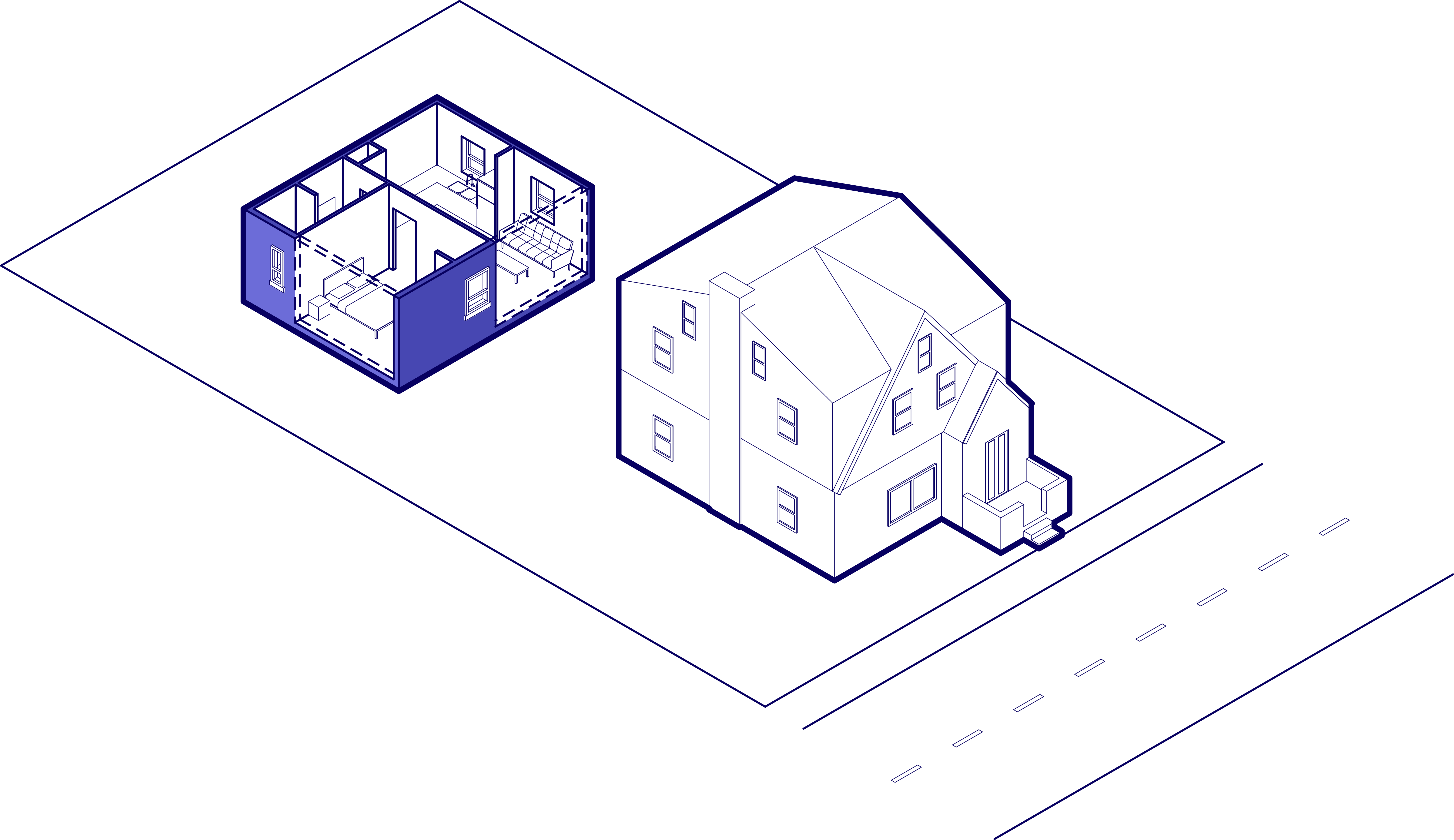
In New York City, an ADU is a self-contained dwelling that’s built on the same zoning lot as another one- or two-family home. Think of an ADU as an extra home, like a rear-yard cottage, a basement unit, or an apartment over a garage. It has its own kitchen, bathroom, and entrance. An ADU is compact, measuring no more than 800 square feet, and is built for residential use only. |
What kinds of ADUs can you build in NYC? |
New York City allows homeowners to create one ADU per single-family or two-family house. Within that framework, you can choose from several types of ADUs depending on your property and goals. The main options include detached units in the rear yard, attached additions to the main building, and interior conversions such as an attic or basement apartment. Each type has its own design possibilities and requirements in concert with zoning regulations and building construction codes, which are explained in the sections below. |
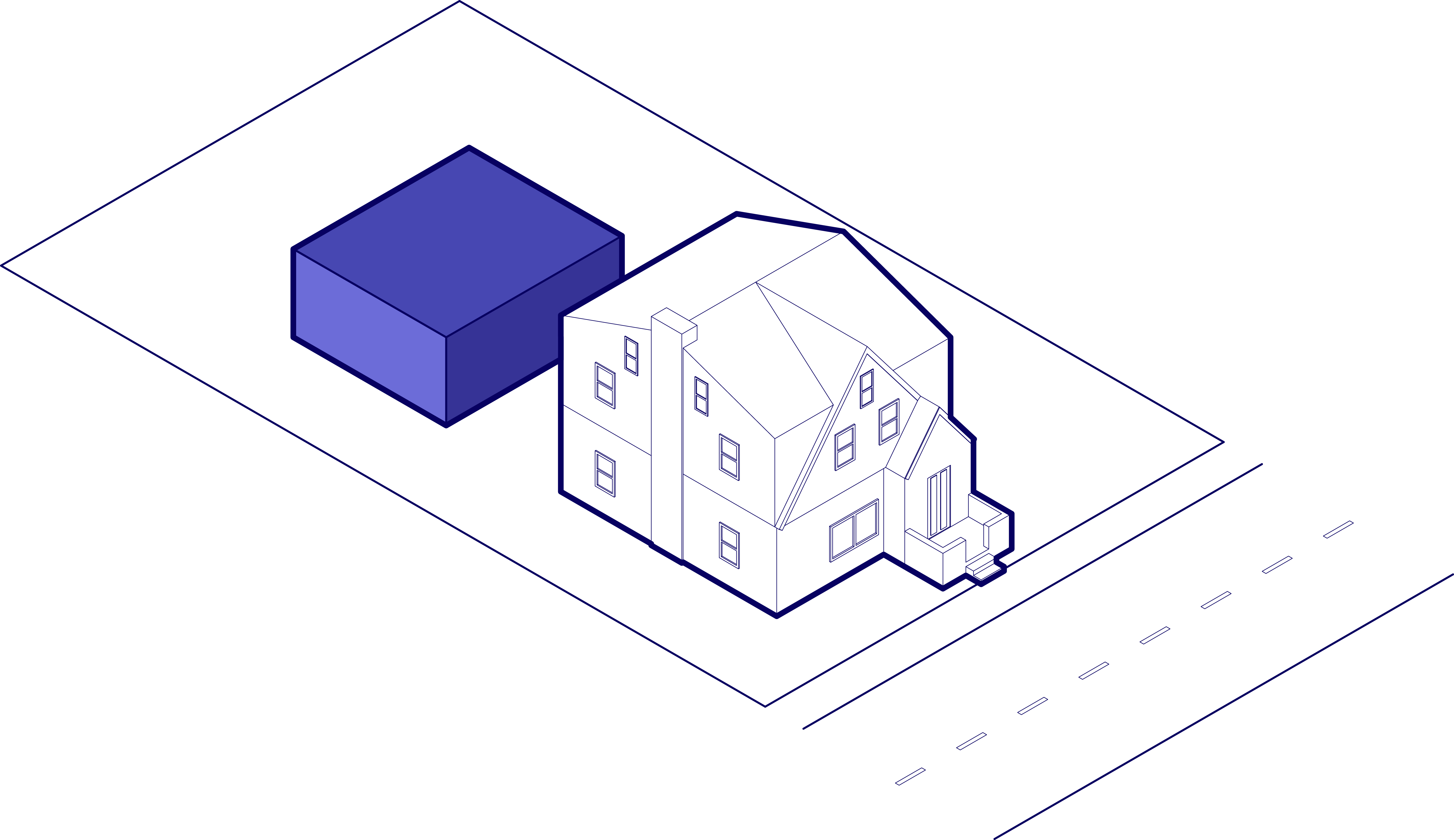
Detached ADU |
A Detached ADU is a separate building in the rear yard. This could be a newly built ADU, a conversion of an existing garage into an ADU, or a new ADU constructed above a garage. Detached ADUs offer great privacy and flexibility. |
Detached conversion |
An existing structure, like a garage or shed, that’s converted or rebuilt into a new living space. Under zoning rules, you can often demolish an existing structure and reconstruct it within the same footprint while still treating it like a conversion. |
Detached new construction |
A completely new structure built in your rear yard that adds living space where none existed before. |
|
Converting or replacing an existing detached structure that predates the City of Yes for Housing Opportunity (adopted December 5, 2024) is allowed even in areas where new Backyard ADUs are restricted. This includes Historic Districts and R1-2A, R2A, and R3A zoning districts. |
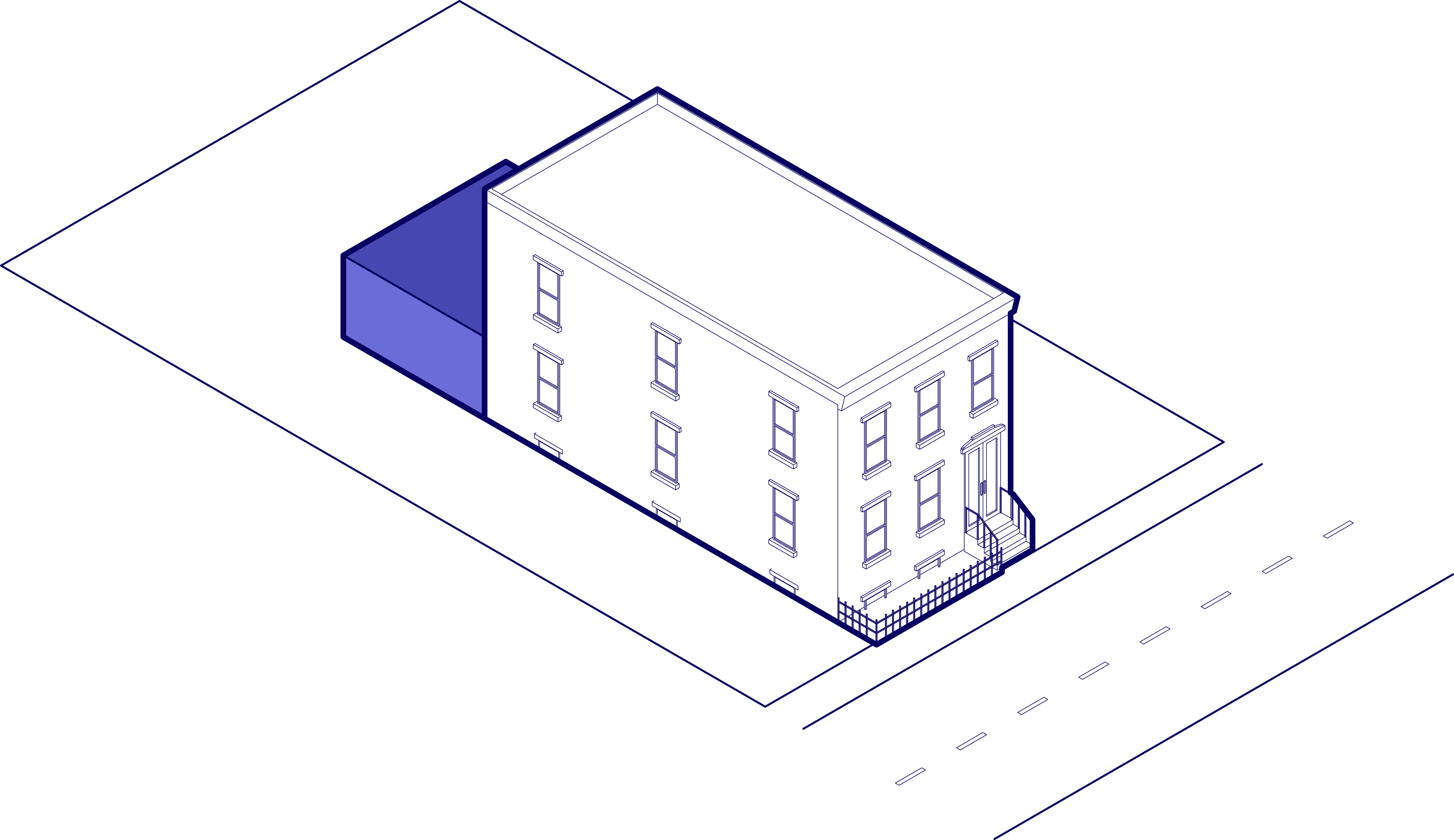
Attached ADU |
An Attached ADU is an addition that abuts your building and expands its footprint. It might run beside the main building in the side yard or extend into the rear yard. This is a separate home with its own entrance that either shares a wall with the main building or sits directly beside it, with its own fire-rated wall. |
|
The New York City Zoning Resolution uses the term abutting to describe buildings or lots that touch or share a boundary, as defined in Section 12-10. In this guide, we use attached to describe the same condition for clarity. | |
Attached conversion |
An existing part of your home, such as a porch, garage, or side addition, that is enclosed or rebuilt to become a separate living unit. The existing space is used to create a legal ADU. |
Attached new construction |
A new addition built onto your home that creates a separate living space connected to the main structure. |
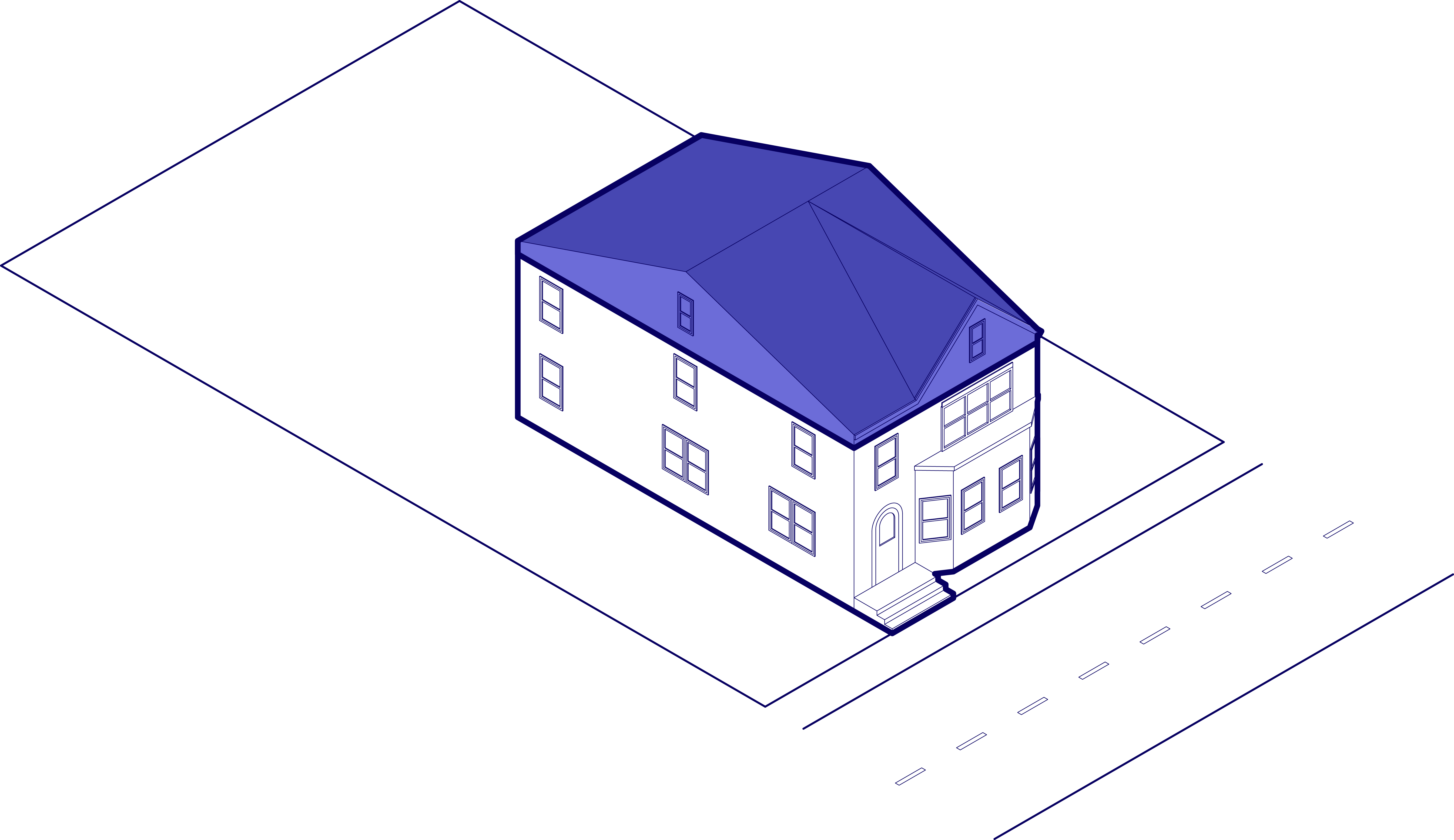
Attic ADU |
An Attic ADU uses habitable space under the roof of your home without increasing your property’s footprint. To qualify as a habitable space, the attic must generally provide at least 7 feet of clear ceiling height over a required portion of the floor area, with areas under sloped ceilings counting only where that minimum height is met. |
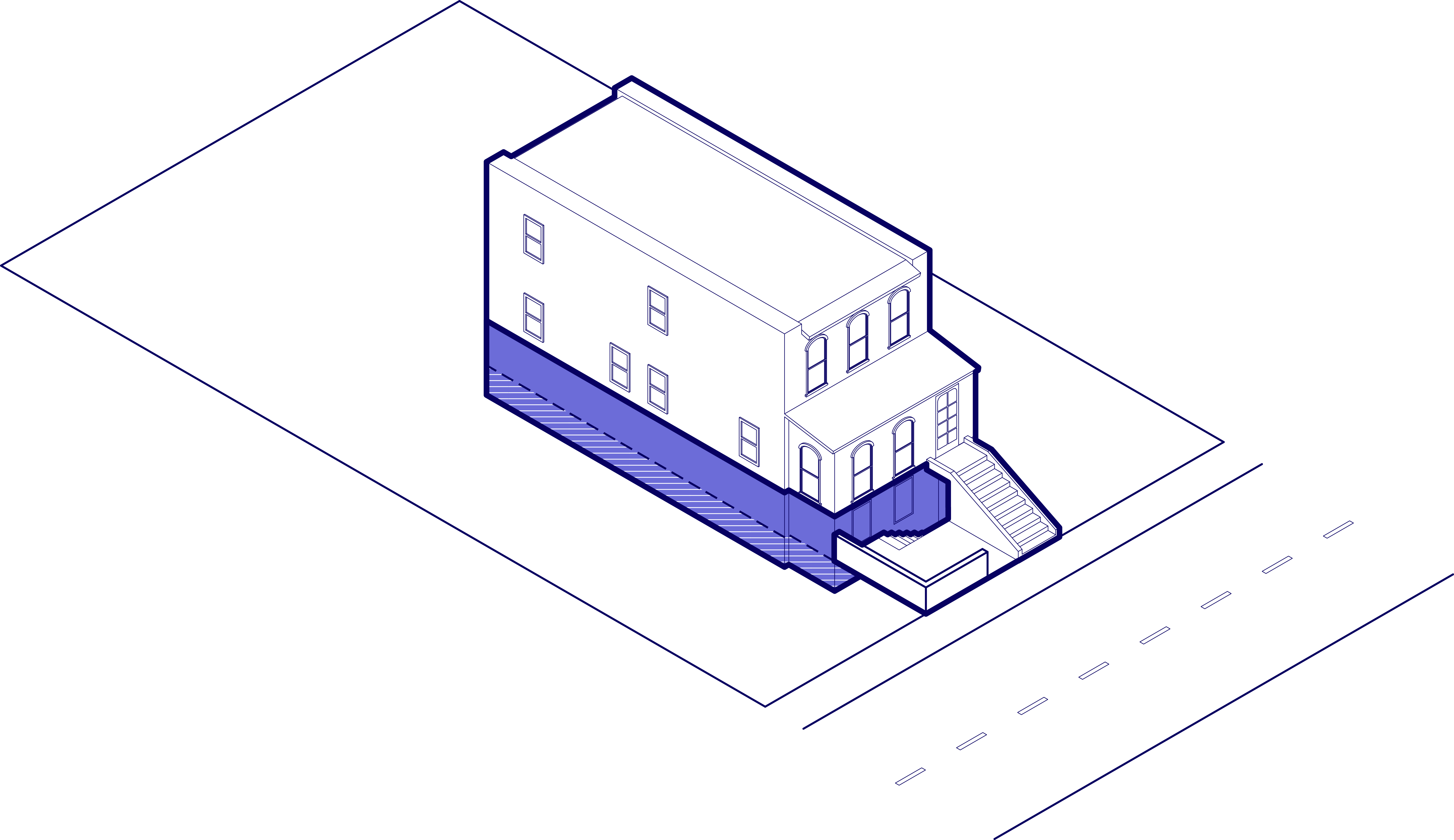
Basement
|
A Basement or Cellar ADU is an apartment below the first floor. To qualify as a legal ADU, the basement and cellar must meet safety requirements for ceiling height, light and ventilation, separate access, and fire protection. Basements and cellars have their own requirements for conversion that differ substantially from those of other ADUs. |
New Basement and Cellar ADUs |
A new Basement or Cellar ADU is built below an existing residence and must meet strict structural, waterproofing, and safety codes. Excavation and foundation work can make this one of the most complex and costly ADU options. |
Basement and Cellar conversion ADUs |
A basement that is finished or remodeled to create a new, separate living unit within an existing home. The space may already have utilities or partial finishes but requires upgrades to meet ADU safety and code standards. |
|
|
Simple definitions of basement and cellar
|
What is a Rear-Yard ADU in NYC? |
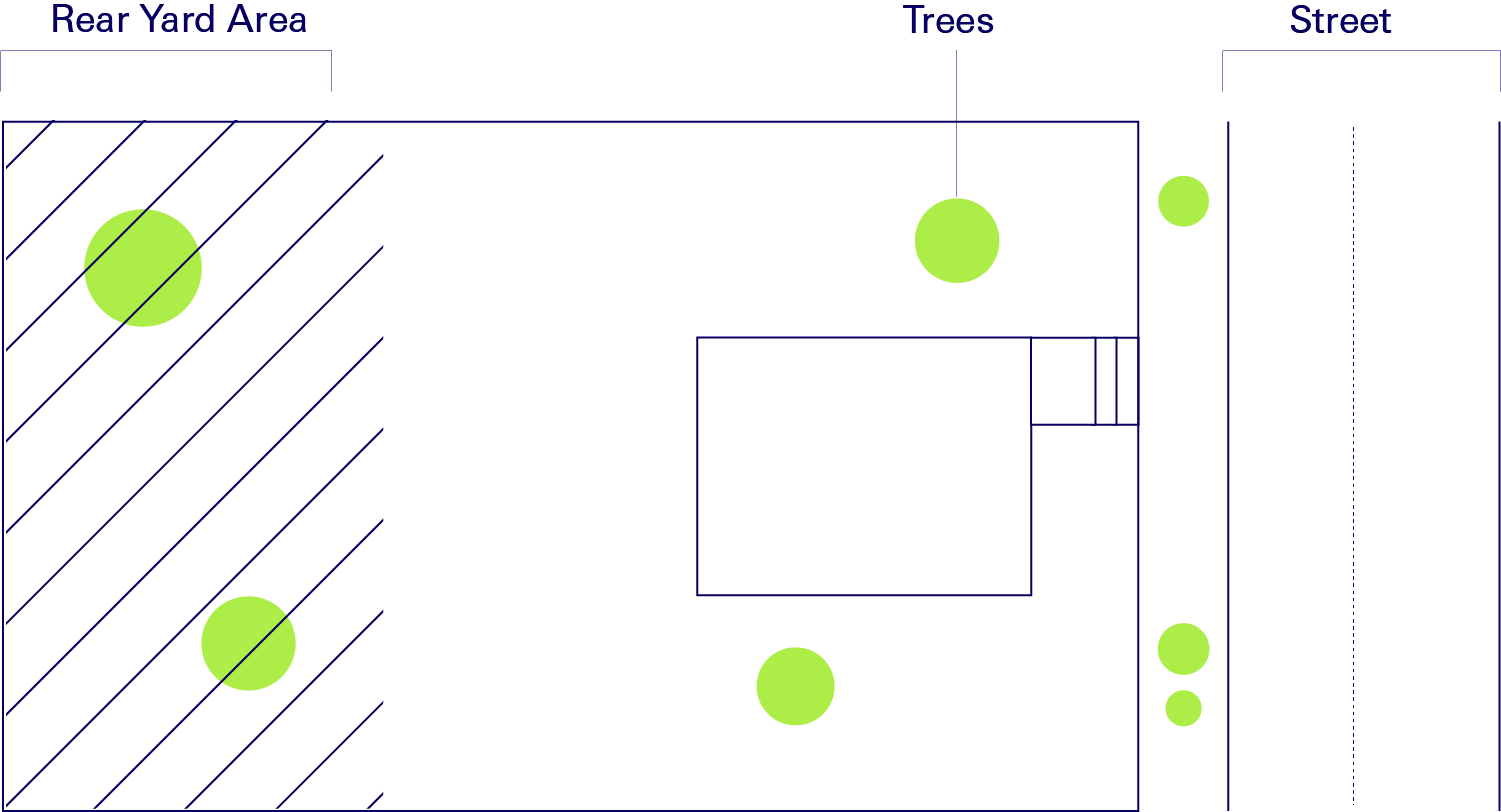
A Rear-Yard ADU is a freestanding home (Detached ADU) that sits behind your main building or a home attached to your main building (Attached ADU). Rear-Yard ADUs are known as Backyard Ancillary Dwelling Units in the zoning resolution. Only some homes in NYC can have a Rear-Yard ADU. The Eligibility Lookup Tool can help determine if you’re eligible to build a Rear-Yard ADU. |
|
Garage conversions are not considered Rear-Yard ADUs under NYC zoning. They follow separate rules because the structure already exists on the lot. Check with your Registered Design Professional (RDP), an architect or engineer registered to practice in New York State, to confirm how your project is classified before starting design work. If you already have a structure, like a garage or shed, you may still be able to convert or rebuild it as an ADU, even in zoning districts where new Rear-Yard ADUs aren’t allowed. These conversions follow different sections of the zoning code and may require additional review. | |
|
If you own a two-family home, adding an ADU may trigger requirements under the New York State Multiple Dwelling Law (MDL). In some cases, you can still move forward by designing the ADU as a fully fire-separated, independent unit. Because these situations are highly site-specific, it’s best to consult an RDP early in your process. They can confirm what’s possible under your zoning, interpret the code, and help you find the right path to creating a safe and legal ADU. |
Why build an ADU? |
An ADU is more than an added living space. It’s a way to adapt your home to changing needs, expand opportunities, and invest in the future. |
 |
Generate incomeCreate an additional rental unit on your property to possibly produce supplemental income. |
 |
Live across generations. Bring family closer.An ADU allows aging parents or adult children to live “next door” while still enjoying privacy. |
 |
Age in place. Stay rooted in your community.A smaller, accessible home on your property lets you downsize while staying at home and in your neighborhood. Explore more about Aging in Place. |
 |
Add space and valueAn ADU can help make better use of your zoning lot and create flexible space that can adapt to your needs over time. It can also add to your property’s long-term value. |
 |
Support gentle growth for your neighborhoodAdding an ADU means adding affordable housing. You provide more choices for people, strengthening both your neighborhood block and the City. |
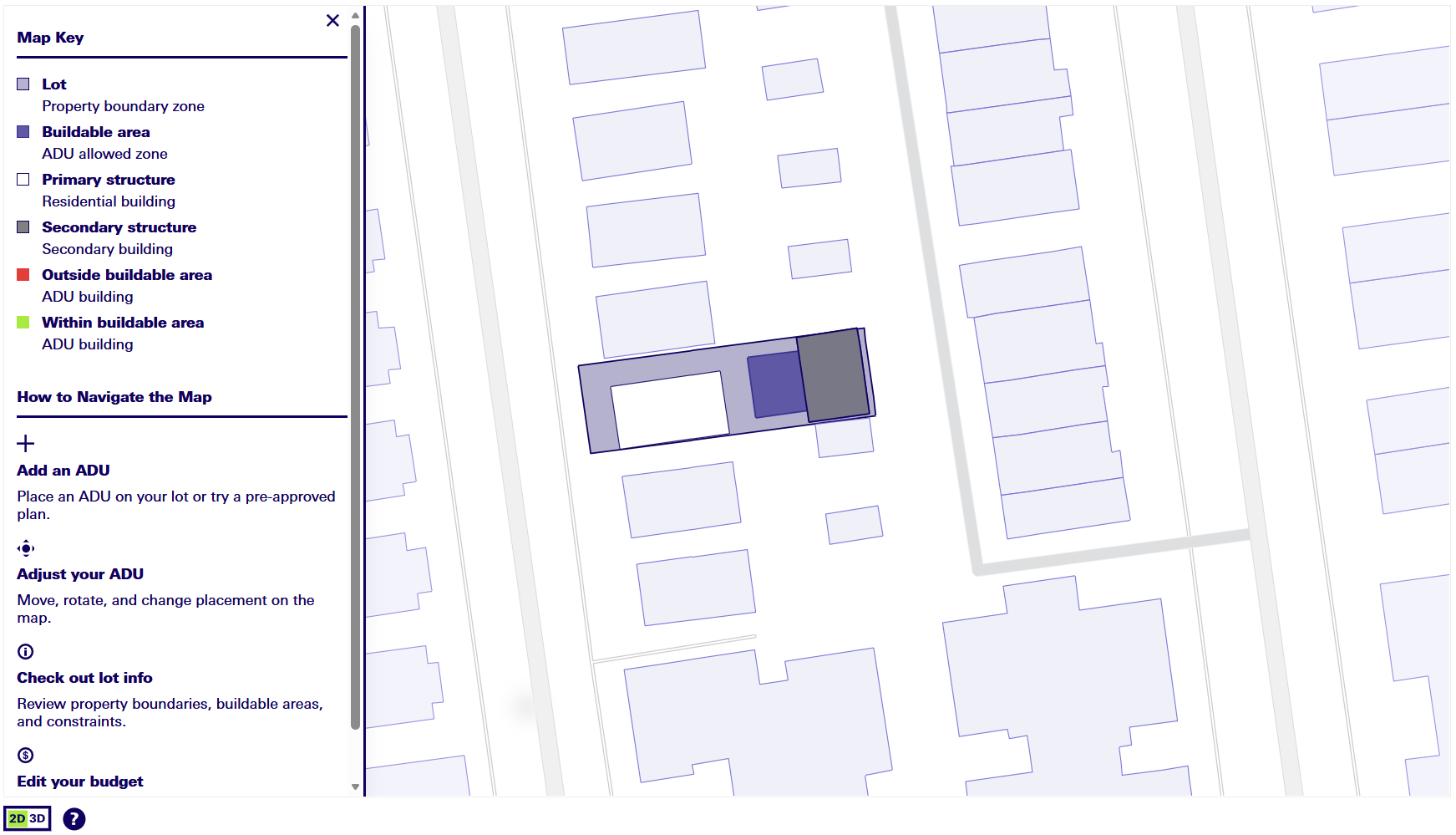 2D Lot view in ADU for You Eligibility Lookup Tool
Quick guide to reading an architectural plan |
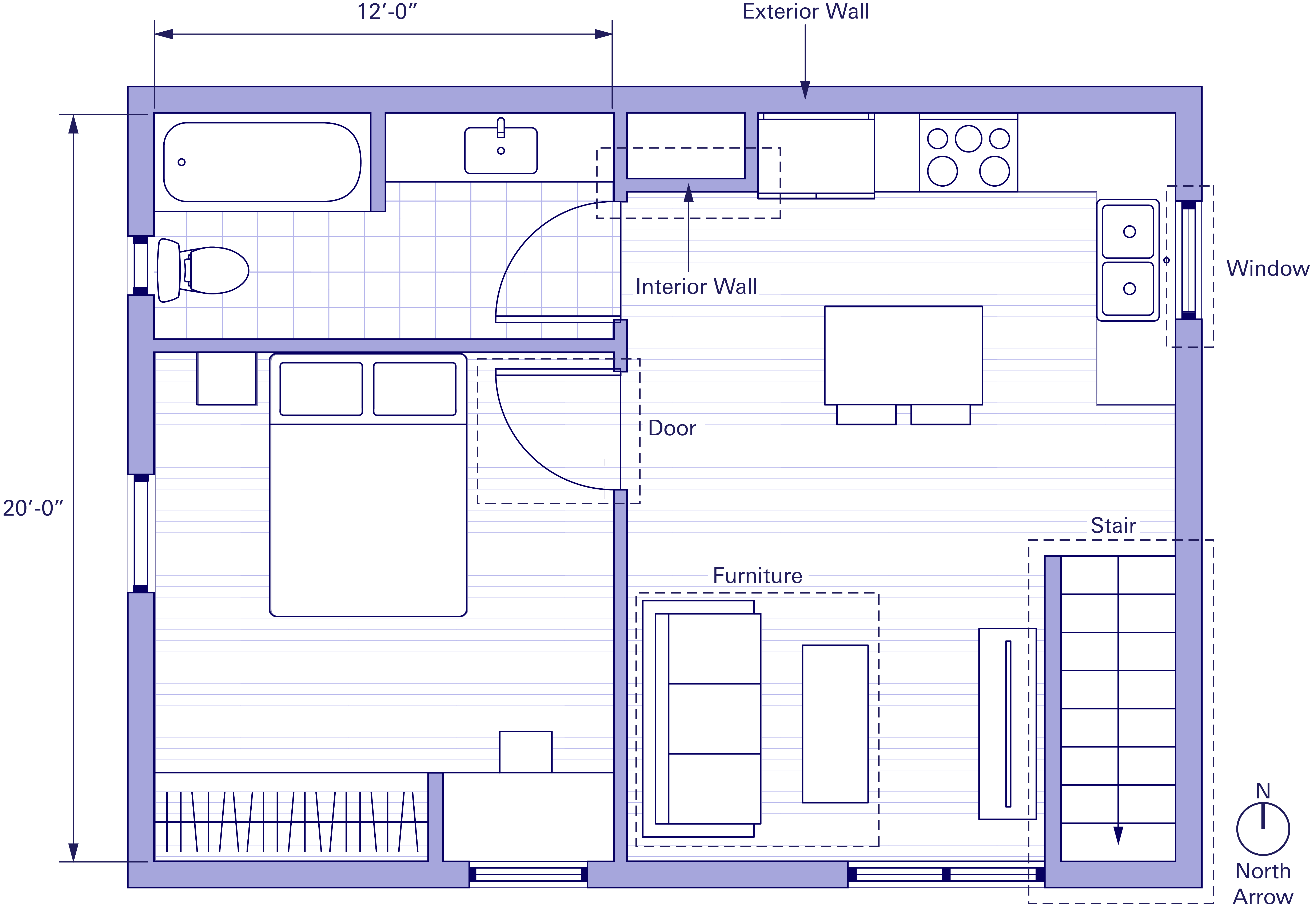
An architectural floor plan is a drawing that presents an aerial view of an interior space and how the spaces are arranged within and around a building at a specific level. For your ADU, that means the floor plan is a top-down view if you cut a slice through your home at around waist height. Plan drawings visually communicate important information about a space’s layout. Understanding some of these elements can help you communicate with your selected RDP and construction contractor, so you can make informed decisions about your ADU design. The diagram below highlights some key components of an architectural floor plan drawing. |
Learning from experience |
|
Room labels |
 |
DimensionsUnderstanding key dimensions can help you understand scale, which is the relationship between the human body and space or another object, and the size of rooms and other design elements. |
 |
DoorsThe direction of the arc represents the direction of the door swing. |
 |
Wall thicknessParallel thick lines typically represent exterior or structural walls, while thinner parallel lines represent interior partitions. |
 |
WindowsWindows in plans are represented by breaks in the wall. Windows are typically represented by a series of tightly drawn parallel lines. |
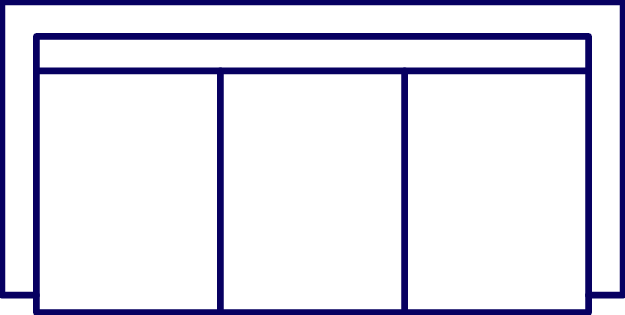 |
Furniture and fixturesFurniture and fixtures (like toilets and sinks) indicate fixture location and demonstrate the scale of what can fit in each space. |
2. Understanding the ADU Process
Building an ADU happens in stages, from confirming your eligibility to construction to moving in or finding a renter. Use this section as a roadmap to understand your role, what to expect from professionals, and how City agencies help guide the process.
What is the process for building your ADU? |
Your ADU journey starts here. This is your chance to imagine how your home can grow with you. Through each step, talk with your family, architect or engineer, or the City agencies guiding you toward creating a new legal, livable home. The following outlines your ADU building process, from determining eligibility to occupying it. |
Process
|
Check your eligibility
|
Look up your addressBefore diving into design ideas, check whether your property is eligible for adding an ADU. In NYC, your eligibility depends on a few factors. Is your home a one- or two-family residence? Does it fall within a flood hazard zone? Use the Eligibility Lookup Tool to find out what is allowed on your lot. Understand your available square footageOnce you know that you're eligible to build an ADU, the next step is figuring out how much space you can use and checking whether you have already maxed out your buildable zoning floor area. For attic or basement units, the size usually fits within the area of your existing floor. For Rear-Yard ADUs, zoning rules decide the size of the footprint. Use the Eligibility Lookup Tool to estimate your buildable area. You can also check the NYC Department of Buildings (DOB) rules and regulations page to learn how to calculate the floor area yourself. Don’t forget to verify the dimensions of your rear yard or home. |
Determine
|
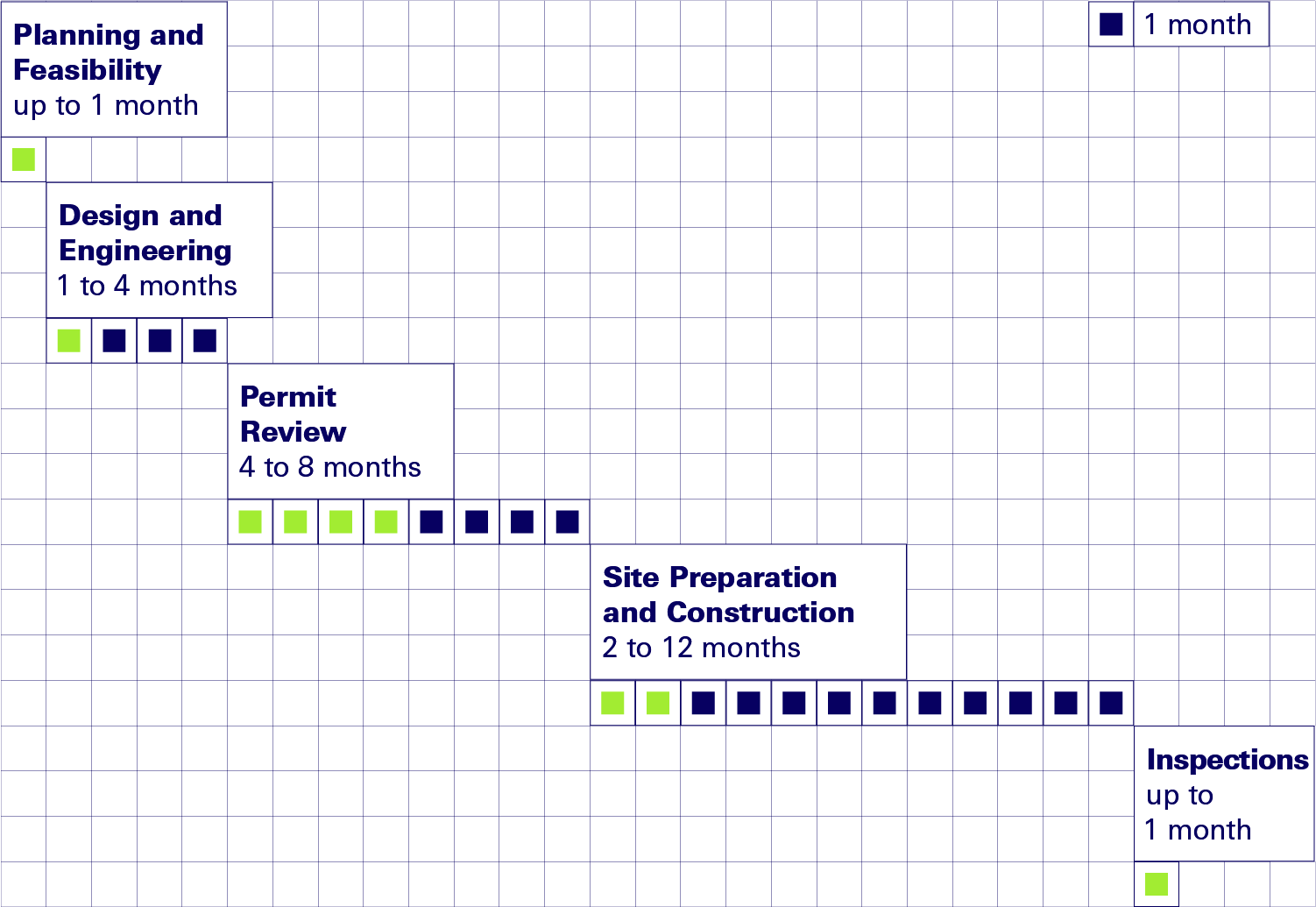
Understand how an ADU can benefit youStart by thinking about why you want an ADU. Do you need space for a relative, a rental apartment to generate extra income, or a long-term investment? Understanding your goals will help you consider your options. This way, you can make informed choices about size, layout, and budget. Building in your rear yardBuilding an ADU from design to completion can take anywhere from two months to two and a half years. The timeline depends on factors specific to your project, including the design complexity of the ADU you select, property conditions, and permitting, as well as how quickly you make decisions and stay involved throughout the process. It’s best to plan a flexible timeline rather than a firm deadline since unexpected challenges can arise in any site-specific construction project. You’ll need to hire a Registered Design Professional (RDP) and a construction team, including specialists like plumbers and electricians, during this phase. You’ll also connect with NYC agencies like the DOB, Department of Environmental Protection (DEP), and Department of Housing, Preservation & Development (HPD). As the project unfolds, you’ll need to monitor progress, coordinate with your design professionals, and consider the best financing options. |
Plan your ADU
|
Survey your propertyBefore moving forward with ADU plans, hire a professional New York State–licensed land surveyor or building surveyor to confirm your lot and house sizes and to assess your home’s existing conditions. At a minimum, it is important to obtain accurate information on your property's utilities, easements, contours, and spot elevations. For interior ADUs, it’s important to understand your home’s existing structure and utilities, as well as its overall condition. Assess the strength of the framing, the location of load-bearing walls, and the condition of floors, ceilings, and foundations before beginning to design. Choose a pre-approved or custom designDepending on the type of ADU you plan to build, you may have access to several methods by which to build it. You could use a plan from the City’s Pre-Approved Plan Library (PAPL), or you can choose to work with an RDP to create a custom design. Another option is to buy a manufactured home and have it installed in your rear yard. Understand your budgetYour budget will shape when and how you move forward with an ADU. Be sure to account for both short- and long-term costs, including construction expenses and potential increases in property taxes and maintenance. Some income-eligible homeowners may qualify for City- and State-funded programs, such as the Plus One ADU Program, which may provide financial assistance and support with feasibility planning and project management. You can also explore the costs and rewards of building an ADU by using the Budgeting Tool. |
Build your ADU
|
Choose a Registered Design ProfessionalWhether you opt for a preapproved design, a manufactured home, or a custom plan, it’s essential to find an RDP who works well with you and is a good fit for your project. For designs chosen from the PAPL, you’ll work with the approved R DP attached to the design. This guide includes questions to ask your RDP before you sign a contract, and questions that help confirm whether their services align with your ADU goals. Contract with a Registered Design ProfessionalOnce you’ve confirmed that your property is eligible, set your goals, picked a design, and planned your budget, the next step is to hire an RDP, whether a New York State–licensed architect or engineer. Get more information and guidance on selecting an RDP on the DOB website. Approve and permit your designAfter your ADU design is complete, your RDP will submit an application to the DOB for a site-specific review of your approved design. If your building is located in a historic district or is an individual landmark, additional review and approval by the Landmarks Preservation Commission (LPC) is required. Once DOB approves your design, your licensed contractor can apply for and obtain the necessary construction permits. If you’re using a design from the PAPL, this application process may be faster and less costly since the plans have already been reviewed and approved by DOB. You will still need approval for your ADU on your specific site. If you’re not using a preapproved design, your RDP will prepare and submit all necessary documents for a full DOB review before permits are issued. As the homeowner, you’ll be asked to sign forms authorizing your RDP and contractor to file applications and permits on your behalf. Construct your ADUIt’s time to start construction. Use the construction timeline to identify key milestones and phases and review the quality assurance cheat sheet to understand what tasks and issues to look out for throughout the process. |
Prepare to move in
|
Conduct inspectionsOnce construction is complete, your contractor will schedule a visit with an NYC building inspector to confirm that your ADU is safe and ready for occupancy. Learn best practices for being a landlordIf you build your ADU to rent, remember that being a landlord entails important ongoing responsibilities. Check the “landlord responsibilities” section for an overview and links to City resources that can help both you and your tenants with the process. |





3. Checking Your
ADU Eligibility
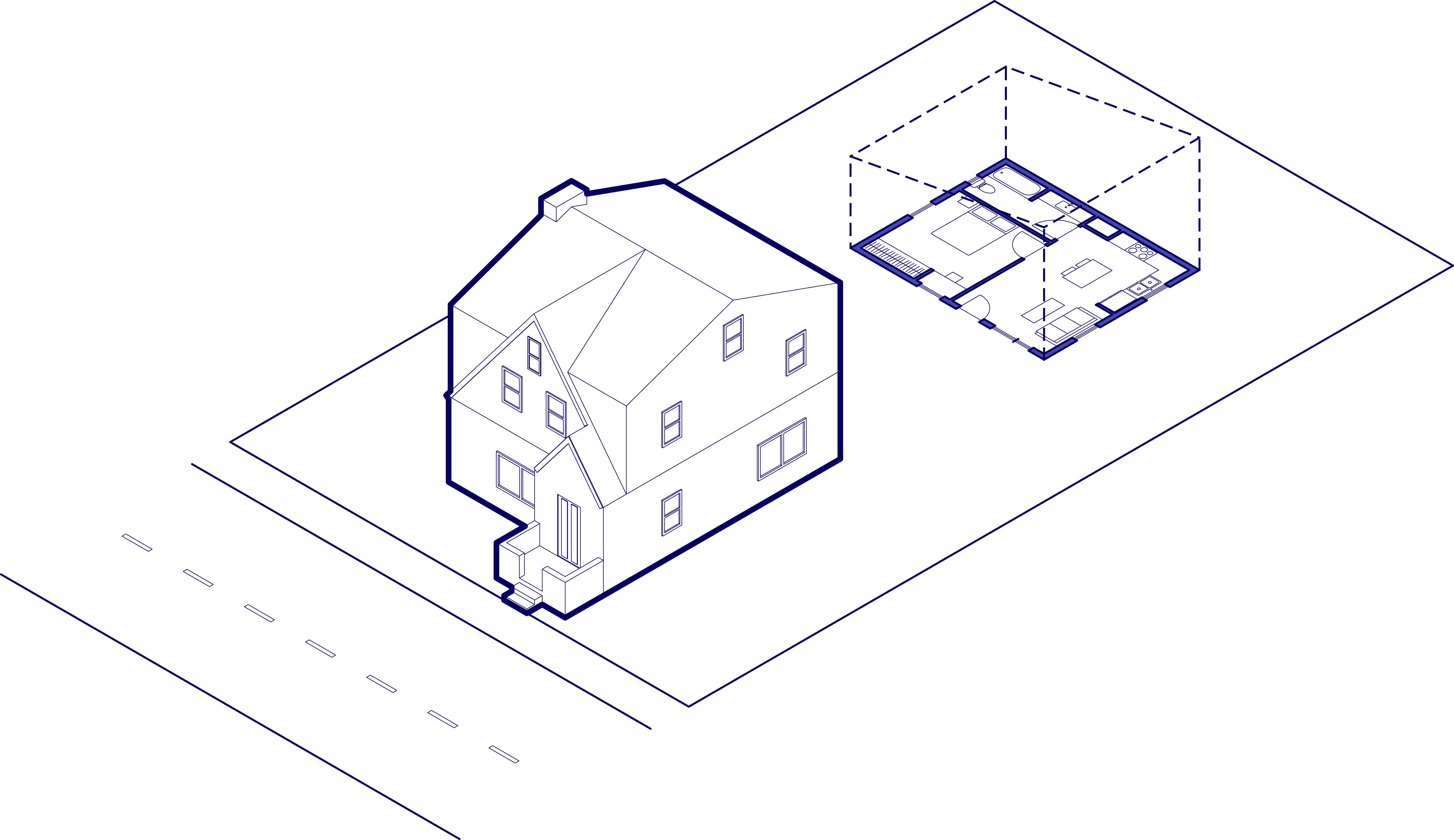
Before you start planning, you’ll need to know whether it’s possible to build an ADU on your property. This chapter explains the zoning and building regulations that determine what you can build, where it can be located, and what site-specific conditions impact your zoning lot. These conditions may include, among others, flood hazard zones, landmark status, and lot size. You’ll also learn how to use the Eligibility Lookup Tool to check your address and see what types of ADUs may be allowed.
The Eligibility Lookup Tool provides a helpful starting point for exploring your property’s potential, but it doesn’t replace a professional assessment. For more detailed guidance, you can contact our technical assistance provider, Restored Homes HDFC, at aduforyou@neighborhoodrestore.org. Their team can help you interpret your results and connect you with resources to take the next step. In addition, you should contact a Registered Design Professional (RDP). They can help guide you through the process.
ADU Eligibility Lookup Tool |
Use the Eligibility Lookup Tool to see if it is possible to build an ADU on your property. Enter your address to see which ADU types suit your lot. Also, check out the Pre-Approved Plan Library for designs that fit within your property’s allowed boundaries. |
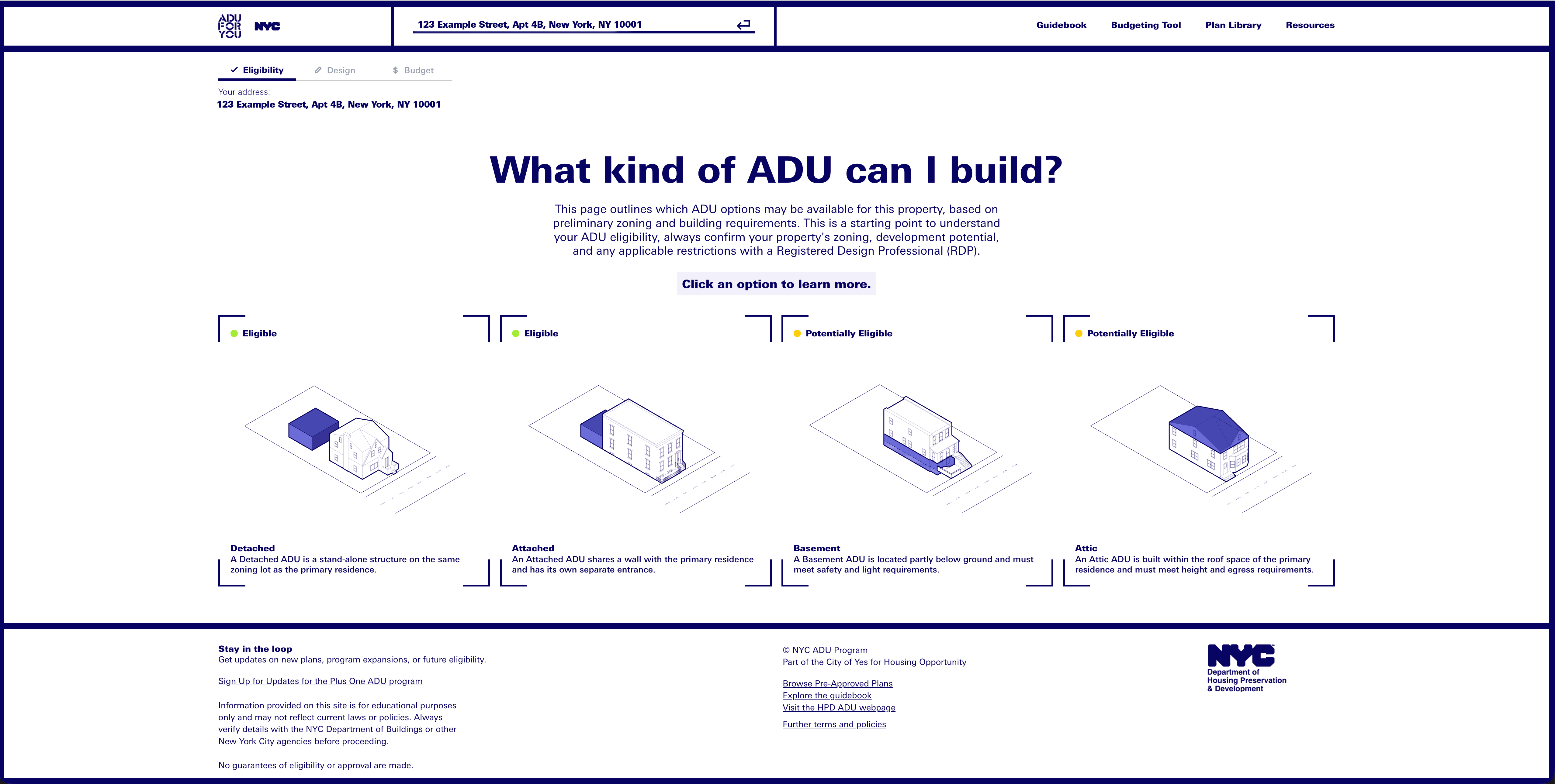
ADU For You Eligibility Lookup Tool
Can I build
|
Your eligibility is based on site-specific regulations, rules, codes, and laws. This includes the New York City Zoning Resolution and Building Code. This chapter outlines the main rules that determine whether your property qualifies, the types of ADUs allowed, and the design limits. If you want to dig deeper, you’ll also find a short guide to zoning and building requirements beyond your lot, plus links to the City’s zoning regulations, building construction codes, and local laws. |
Where are ADUs allowed in NYC? |
The map below identifies areas of New York City where Rear-Yard ADUs are allowed and where they are not. This includes historic districts, flood hazard zones, and neighborhoods outside the City’s Greater Transit Zone. |
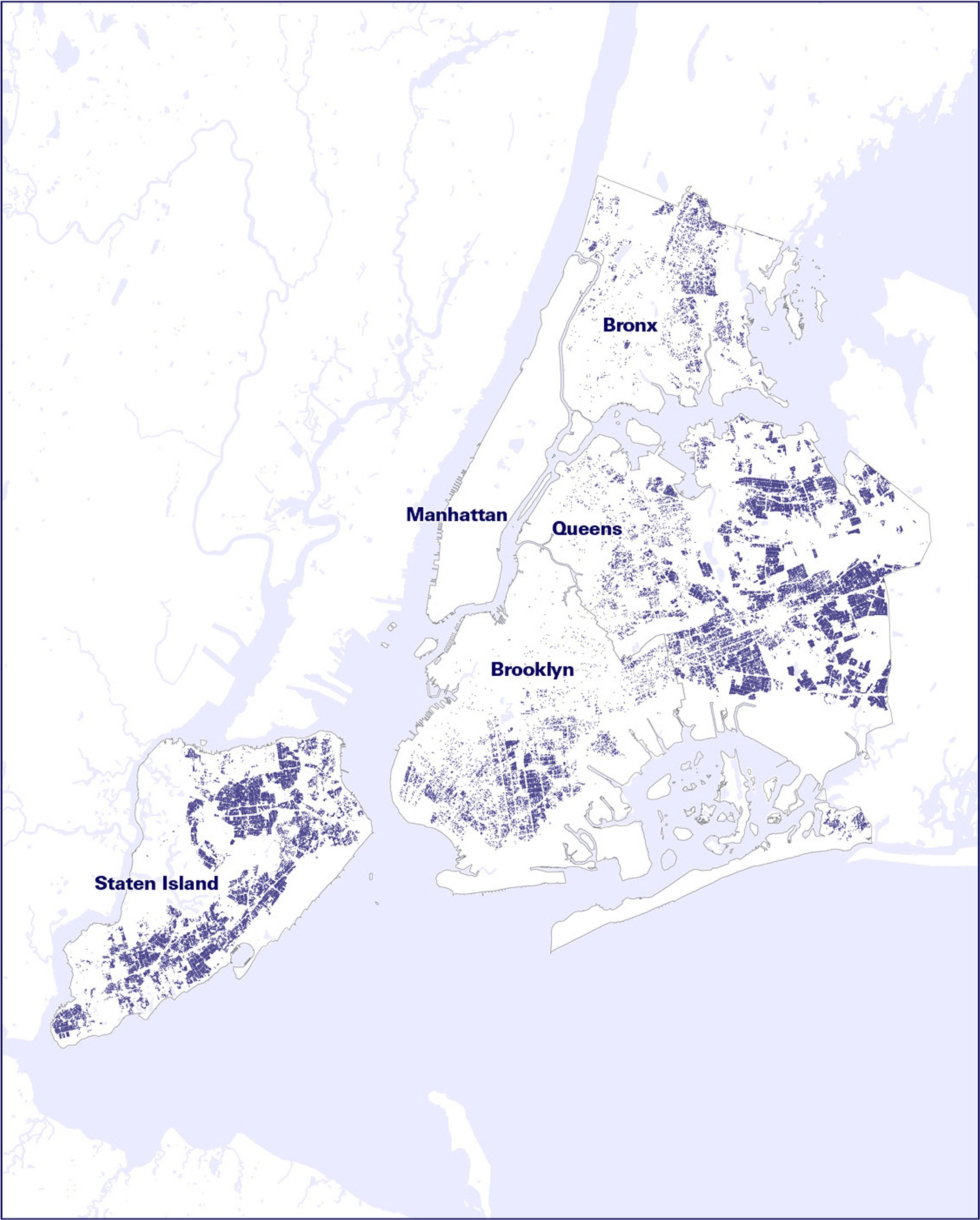
Map identifying areas of New York City where Detached ADUs are currently allowed
Flood hazard zones |
Basement, Cellar, and Rear-Yard ADUs are not allowed in flood hazard zones identified by the Department of Environmental Protection (DEP). Click the NYC Flood Hazard Mapper to see whether your property is in a flood hazard zone. |
|
Detached conversions, such as a rebuilt or converted garage, may be permitted in flood zones if designed to meet current flood-resistant construction standards. This includes elevating the structure above the Base Flood Elevation (BFE) with additional freeboard to reach the Design Flood Elevation (DFE) as required by Appendix G of the NYC Building Code. |
|
If you believe your proposed ADU meets flood safety standards, you may request a determination from DOB. If DOB denies your application based on flood risk, you can appeal to the NYC Board of Standards and Appeals (BSA) under Charter Section 666 (6) (7). |
Other restrictions |
Rear-Yard ADUs and zoning limitsRear-Yard ADUs are not allowed in zoning districts R1-2A, R2A, and R3A outside the NYC Greater Transit Zone . They are also not permitted in historic districts designated by the Landmarks Preservation Commission (LPC) unless you convert an existing structure, such as a garage, into an ADU. In those cases, additional review and LPC approvals will still be required. |
Note on Rear-Yard ADUsRear-Yard ADUs refer to newly constructed Detached ADUs developed after December 5, 2024, under the City of Yes for Housing Opportunity zoning amendment. These are prohibited in certain low-density districts. However, structures that existed before that date, such as garages or other outbuildings, can still be converted or rebuilt as ADUs, even in areas where new Rear-Yard ADUs are not allowed. |
Zoning Regulations (ZRs) and guidelinesBefore you design or build an ADU or contract to purchase and install a manufactured ADU, you need to know the zoning rules that apply to your property. These regulations determine where ADUs are allowed in New York City, how big they can be, and where they can be located on your property. They also set minimum standards for access to light and ventilation, whereas neighborhood context regulations can govern building height, yard space, and separation between buildings. This section translates key zoning definitions from ZR Sections 23-341 and 23-371 of the NYC Zoning Resolution into plain language so that you can apply it to your own lot. |
Garage conversions and ZR Section 54-53If you’re converting or rebuilding an existing garage into an ADU, ZR Section 54-53 of the NYC Zoning Resolution is especially important. It outlines how existing structures that do not meet current zoning requirements can be altered, enlarged, or replaced while maintaining the lawful status of an existing building that may comply or conform to existing zoning regulations. This section provides flexibility for garage conversions and other Detached ADUs that predate the City of Yes for Housing Opportunity. |
Manufactured homes and NYC lot sizesWhile zoning may allow manufactured ADUs, many New York City lots are too small for delivery and full installation. In most cases, a hybrid approach of building or assembling parts of the unit on-site will be more practical. Check with an RDP to see whether your lot can accommodate a manufactured ADU and what modifications might be required. |
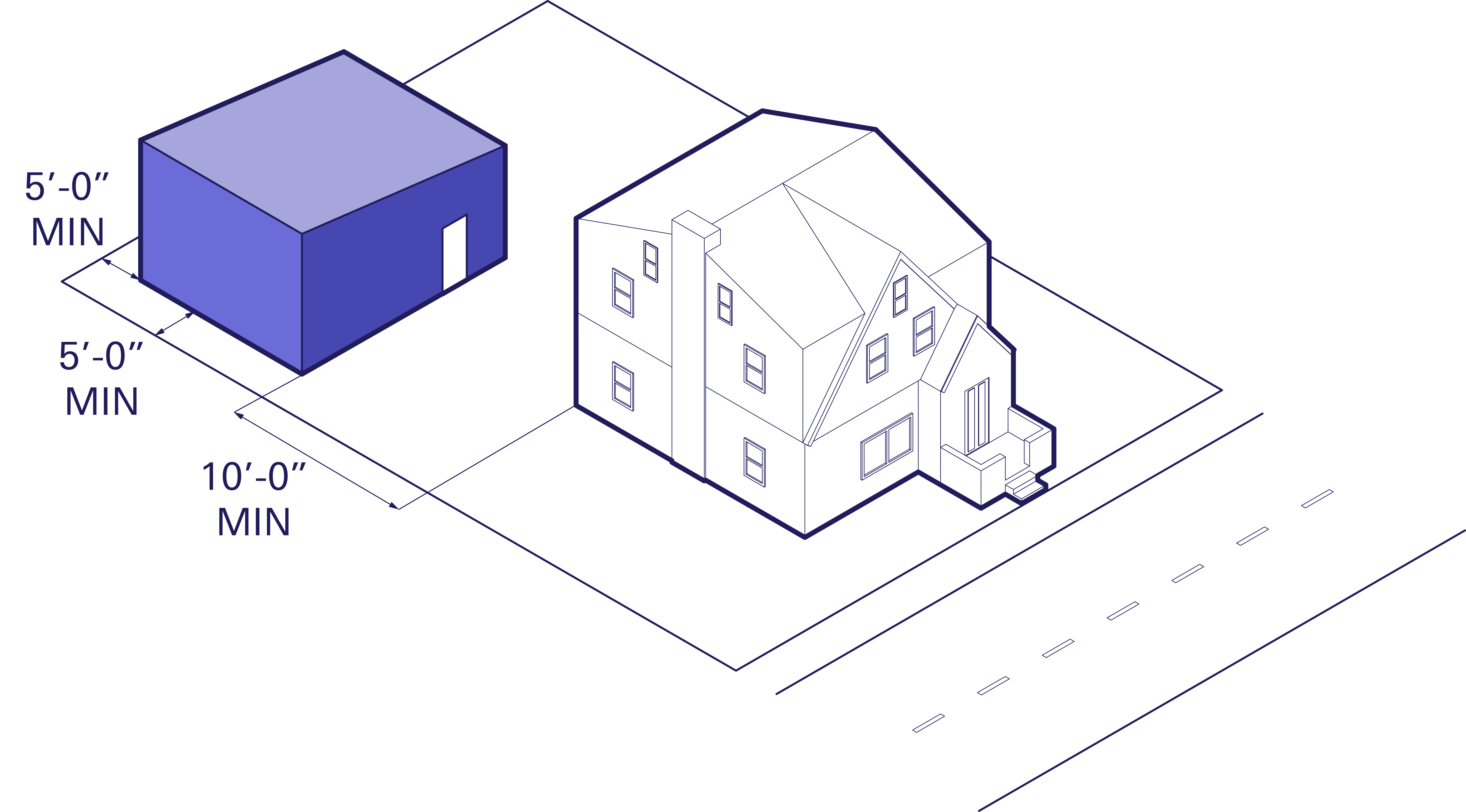
Where on my property can I have an ADU? |
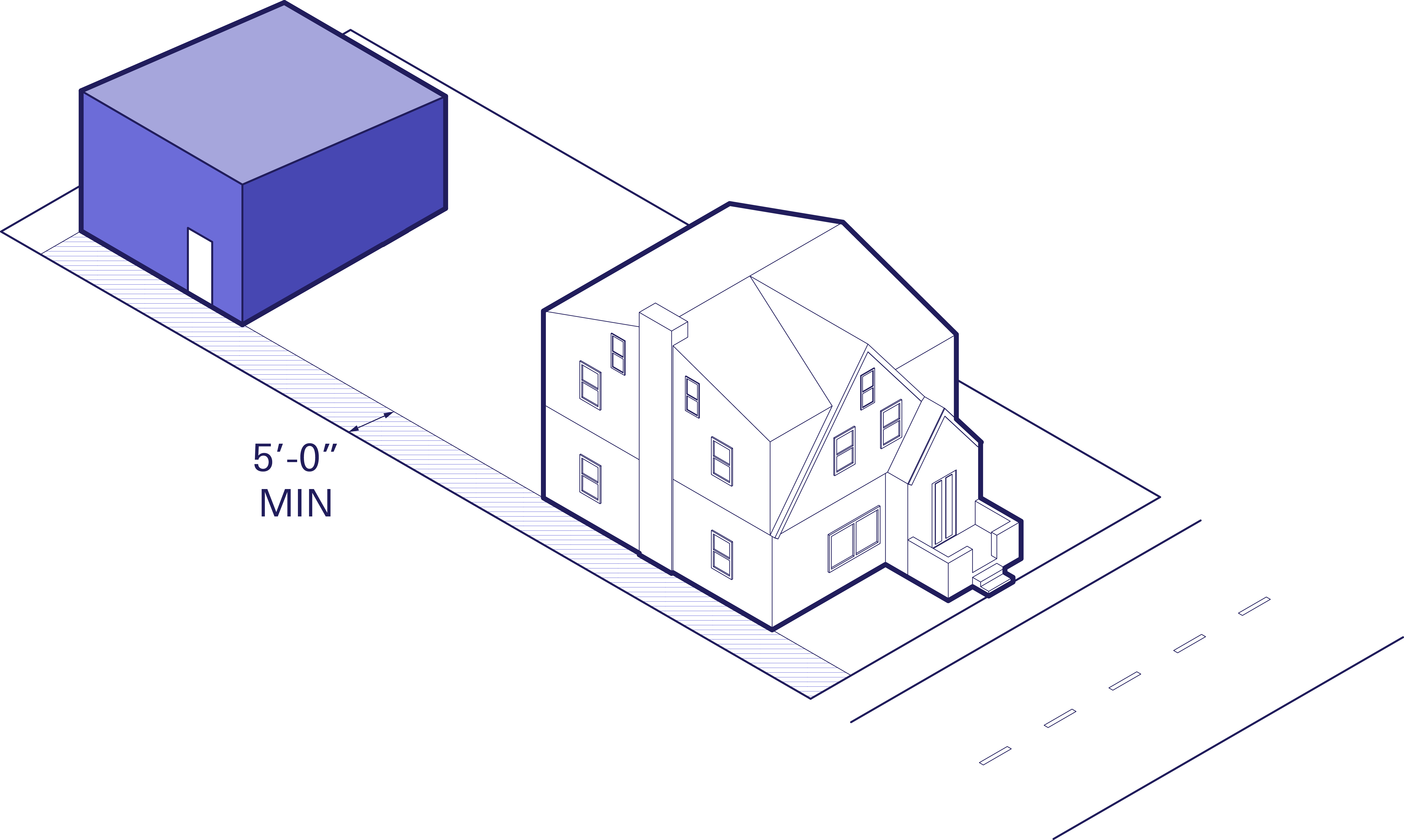
ADUs must be located at least 5 feet from all rear- and side-zoning lot lines. Lot Line Offsets | ZR Sections 23-341 and 23-371 |
|
|
There must be at least 10 feet of separation between the primary house structure and a Detached ADU. The distance helps maintain light, air, and safety between buildings. While larger houses, including those over 35 feet tall, may require greater separation from other residential buildings, the 10-foot minimum applies specifically to ADUs and their primary houses. Distance Between New and Existing Structures | ZR Sections 23-341 and 23-371 |
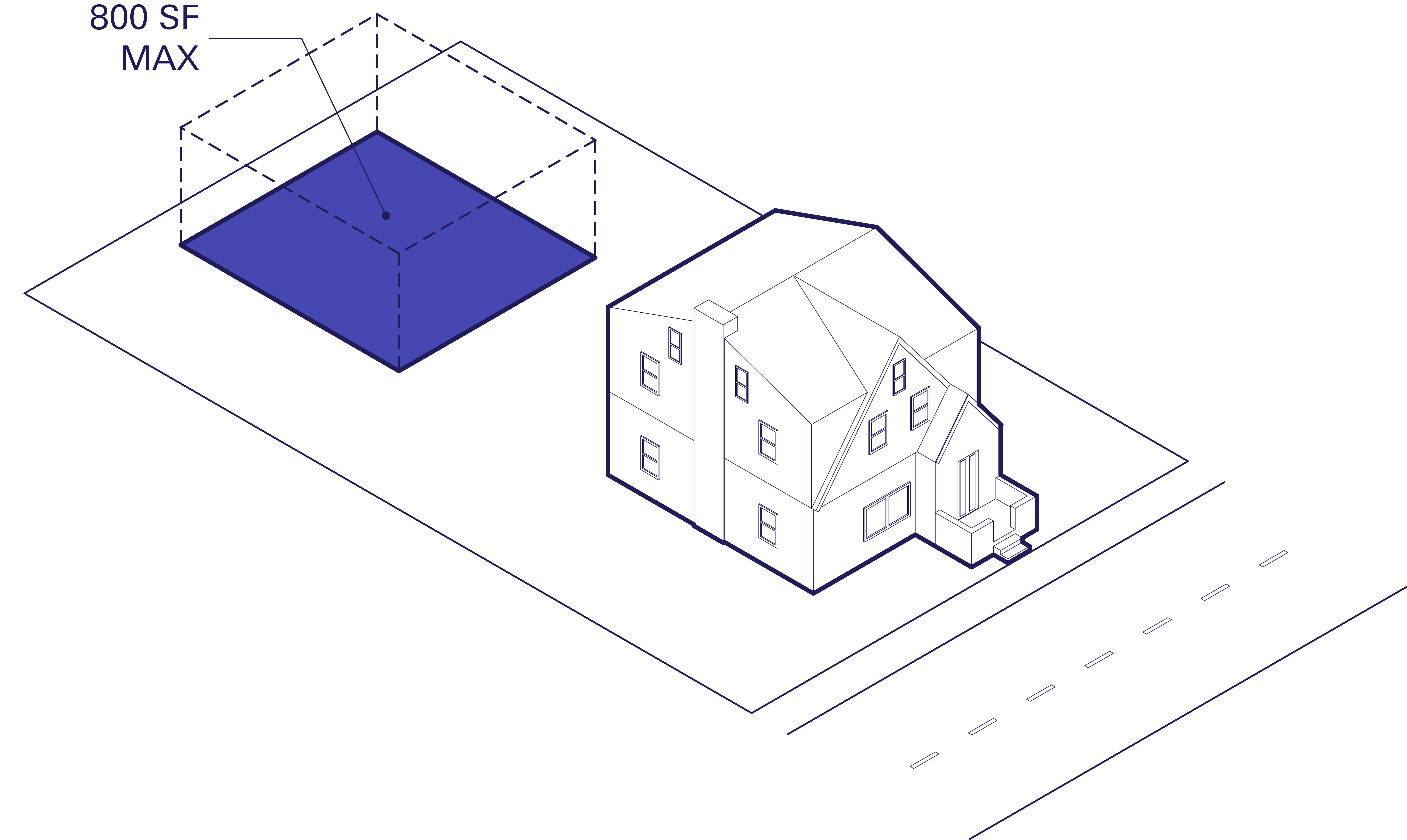
How big can my ADU be? |
Your ADU cannot exceed 800 square feet. Area | ZR Section12-10 |
|
While zoning doesn’t set a minimum size, the Building Code does through habitability standards. A habitable room must be at least 70 square feet, with a minimum dimension of 7 feet and a ceiling height of 7 feet 6 inches (or 7 feet in basements). Kitchens and bathrooms must comply with required clearances for plumbing fixtures, and sleeping rooms must provide a code-compliant means of egress, including an exit path and window where required. When you combine these requirements, including space for living or sleeping, a kitchen, and a bathroom, the practical minimum size for most ADUs is 250 to 300 square feet. |
|
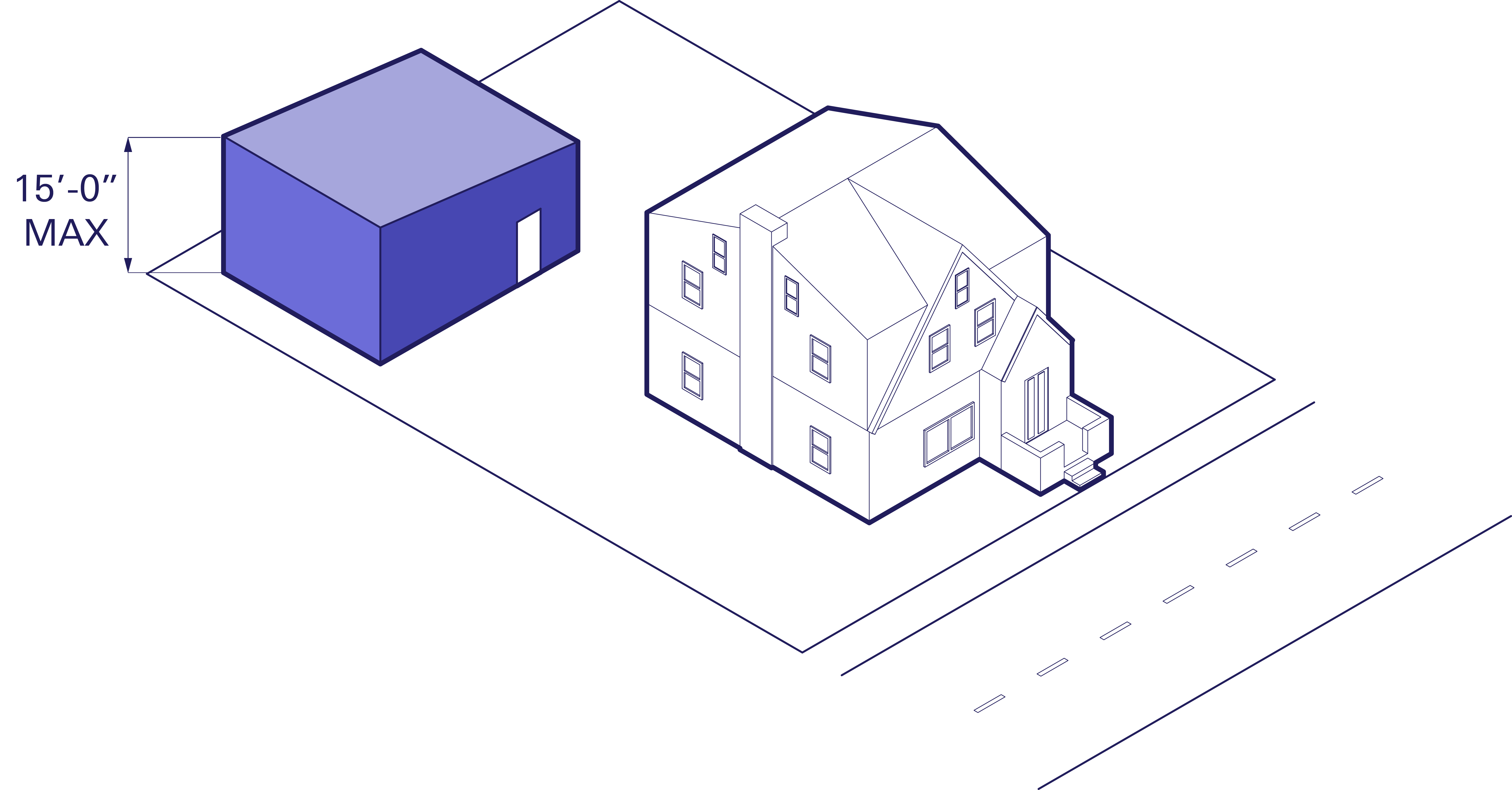
For ADUs added to a detached, semi-detached, or zero-lot-line building, the height is capped at one story. It can't exceed 15 feet in height, measured to the highest point of the roof. Maximum Building Height | ZR Sections 23-341 and 23-371 |
|
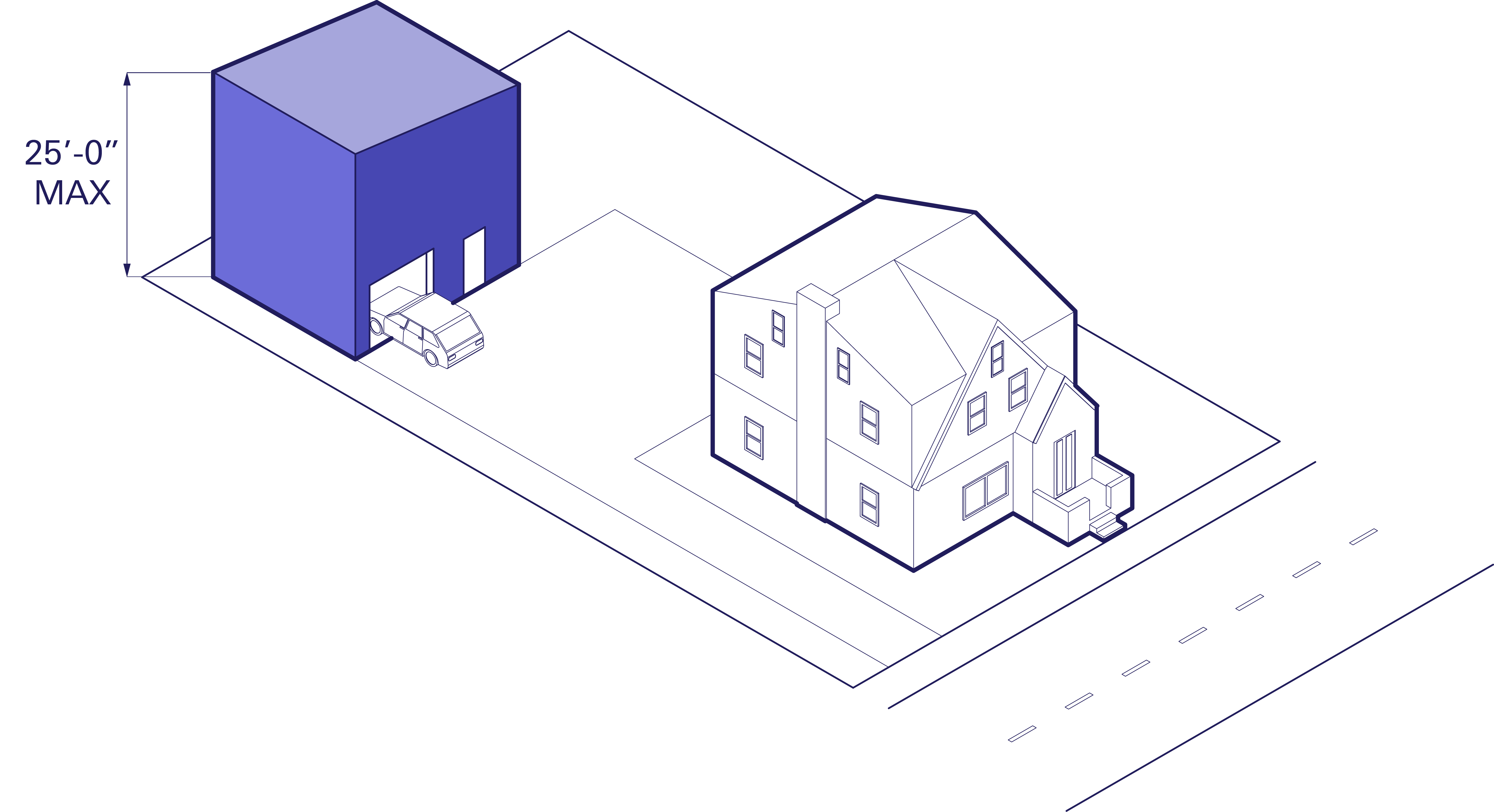
If the ADU has a parking space or garage below, it is limited to two stories and cannot go over 25 feet high, measured at the highest point of the roof. Maximum Building Height with Garage | ZR Sections 23-341 and 23-371 |
|
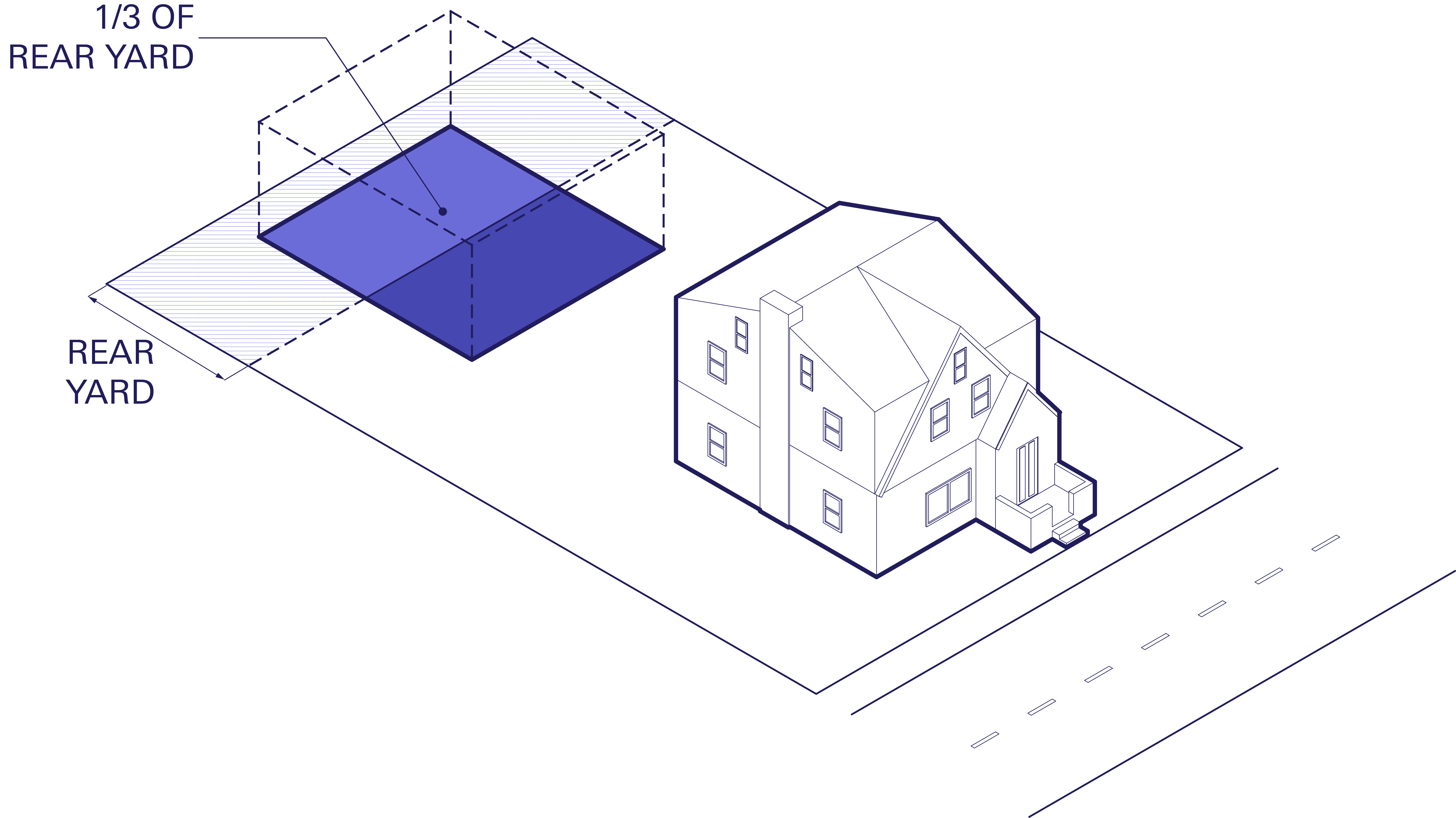
A Detached ADU cannot take up more than one-third of your property’s ZR-required rear yard. The rear yard is the open space at the back of your property measured 20 feet into the lot from your rear lot line. For example, to build a 500-square-foot ADU, your rear yard must be at least 1,500 square feet. Rear Yard Requirements | ZR Sections 23-341 and 23-371 |
|
In New York City zoning, a “rear yard” is a defined open area behind your primary home. If your property is semi-detached or attached to another home, your available rear-yard area may differ, so look at the zoning map or consult your RDP to confirm where you can build your ADU. |
What other key zoning regulations should I know? | When your ADU is completed, you must live in either the main house or the ADU as your primary residence. Initial Occupancy | ZR Section 12-10 |
|
|
Detached ADUs require a side yard at least 5 feet wide with direct access to the street. This typically rules out row houses with walls attached to neighboring structures on both sides. ADU Access | ZR Section 12-10 |
|
Want more details? Explore related information in the appendix. | |
Deed restrictions and property conditions |
Before you begin an ADU project, review your property deed carefully. In New York City, deed restrictions, also called restrictive covenants, can determine what you can build or modify, and how you use your land. These are binding legal conditions that run with the land and apply to all future owners. You can search your property records online through the NYC Department of Finance’s Automated City Register Information System (ACRIS), or through the Richmond County Clerk’s Office for Staten Island properties. Before filing any ADU plans, also check for open building violations. Unresolved violations can delay or block the issuance of your permits. You can look up your property records using DOB NOW or the Buildings Information System (BIS) on the DOB website. |
What are deed restrictions? |
Deed restrictions are legal terms recorded in public records that set conditions for how a property can be used. They might limit building height, define setbacks, restrict additional dwelling units, permit use of property as a shared driveway, or require certain maintenance or preservation standards. Restrictions can be enforced by City agencies, previous owners, or homeowners' associations. |
Existing and new restrictions |
Always check for existing restrictions during your title search. Some date back decades and may include limits such as prohibiting multifamily use or additions. New projects may require new deed restrictions, especially when creating shared access, such as a driveway, or changing how a property is used. For example, if the 5-foot access path to your rear-yard ADU is shared with a neighbor, you may need a legal easement agreement to ensure that no one will block that path in the future. DOB, FDNY, or the Department of Citywide Administrative Services must review, approve, and record these documents. Review the City’s approved templates before drafting your own agreement. You can find them in Buildings Bulletin 2015-008. Steps for homeowners:
Understanding deed restrictions, easement agreements, and restrictive declarations is as important as securing your permits. These conditions can affect what and where you can build, financing, construction scope, and resale value. Careful review ensures your ADU plans align with both City regulations and your property’s legal framework. |
4. Budgeting for
Your ADU
Building an ADU is a major investment, and costs come in several forms. Some are “soft costs” like design, permits, and insurance, while others are “hard costs” tied directly to construction labor, equipment, and materials. This section breaks down the main categories of expenses and gives you estimated ranges so you can start planning your budget.
You can use the Budgeting Tool to estimate the costs of your ADU.
Types of expenses |
|
|


Soft Costs |
Surveyor Registered Design Professional (RDP) fees Engineering fees Insurance for the building process Submetering Approval and permitting fees Property insurance Possible tax increase Testing consultant Temporary utilities |
Hard Costs |
Building materials General contractor Equipment rental Foundation excavation Utility hookups Mechanical/electrical/plumbing (MEP) labor Restoration work Demolition Site work Sprinklers Attic work |
The Pre-Approved Plan Library may help you reduce some costs |
One of the biggest advantages of New York City’s Pre-Approved Plan Library (PAPL) is the potential for cost savings. Because the plans have already been reviewed for general zoning and code compliance, using a preapproved design may reduce soft costs such as extended reviews, repeated filings, and additional consultant time. This means projects may move faster, and budgets may be more predictable. |
How can I finance my ADU? |
Adding an ADU is a major investment, but homeowners have several ways to finance it. Conventional financing options include: Home equity loansThis type of loan lets you borrow money based on how much of your home you already own. You receive the money to design and build your ADU all at once and pay it back in fixed monthly payments like a second mortgage. Home equity lines of credit (HELOC)A HELOC gives you access to a flexible line of credit that you can draw from as needed during your project. It uses your home's value as security. You can withdraw money as needed during your project and pay interest only on what you use. Construction loansA construction loan provides short-term financing to cover building costs while your ADU is under construction. Once the project is complete, it often converts into a standard mortgage or long-term loan. Cash-out refinancingWith a cash-out refinance, you replace your current mortgage with a new one that’s bigger. You get the difference in cash, which you can use to pay for your ADU, but you’ll start a new mortgage in the process. Personal loansA personal loan gives you money up front without requiring you to use your home as collateral. It may be faster to get, but it may come with higher interest rates and shorter repayment terms. These options are widely available through banks and credit unions and can be paired with City and State programs designed specifically for ADU development. |
The Plus One ADU Program |
The City’s flagship financing tool is the Plus One ADU Program, which combines capital loans and grants to help eligible homeowners build or legalize ADUs. Key features include:
To qualify, homeowners must occupy their homes, be current on mortgage payments, and have no outstanding municipal arrears. |
Calculating potential rental income |
Financing an ADU often involves balancing construction and ongoing maintenance costs with future rental income. You can estimate rental potential by comparing local market rents to projected monthly loan payments, factoring in insurance, maintenance, and utility costs. Our Budgeting Tool helps model these scenarios so you can understand when and how your ADU can begin to pay for itself. |
City incentives |
New York City offers a variety of programs to support you when your ADU project contributes to sustainability, housing growth, and/or first-time rental opportunities. These programs provide financial incentives, tax benefits, and technical assistance that can help offset costs and facilitate the process of becoming a landlord. |
| Sustainable building incentives |
NYC Accelerator |
| Densification and affordable housing |
NYSERDA incentives |
| First-time and small landlords |
Plus One ADU Program |
Steering clear of predatory lending |
Lenders can open the door to financing your ADU, but they may not always have your best interests in mind. Predatory loans often come with unfair terms, hidden fees, or interest rates that make repayment nearly impossible. Some red flags include high-pressure sales tactics, promises of “guaranteed approval,” loan terms you don’t fully understand, or being asked to sign blank documents. To protect yourself, always compare offers from multiple lenders, read the fine print carefully, and ask questions until you’re comfortable with every term. Working with reputable banks, credit unions, or City-endorsed financing partners is the safest route. If something feels off, like payments that don’t add up or fees that weren’t disclosed, don’t sign. A good loan should be transparent, predictable, and affordable over the long run. |
Homeowner Help Desk |
The Homeowner Help Desk (HHD) provides free support to low- and middle-income homeowners across New York City. Scammers often target households facing financial strain, but HHD connects you with trusted housing counselors and legal experts who can help you protect your home and your future. They may also help guide you through your ADU costs and loan process. The Homeowner Help Desk may assist you with:
|
For neighbors and family |
You don’t need to be a homeowner yourself to make a difference. HPD offers workshops and training to help you recognize the signs of scams and deed theft so you can support friends, family, and neighbors. |
Contact information |
If you’re a homeowner in need of support, call (646) 786-0888 or visit homeownerhelpny.org. Assistance is free and confidential. |
Renting out your ADU |
You may have built your ADU with the goal of renting it. In New York City, rental rules depend on whether you plan to offer the apartment for a short-term stay (fewer than 30 days) or a long-term lease (30 days or more). Understanding the difference is key to staying compliant and protecting yourself as a landlord. Short-term rentals (fewer than 30 days) Violating these rules can lead to significant fines. Helpful resources: Long-term rentals (30 days or more) Helpful resources: Residential Tenants’ Rights Guide (New York State Attorney General) Changes in New York State Rent Law 2025 Apartment/Loft Rent Guidelines Board Order NYC Department of Housing Development & Preservation ABCs of Housing |
5. Designing Your ADU
Here is where your ideas start to take shape. This chapter helps you connect your goals and vision with the type of ADU that fits your property. You’ll also see how different design choices can help make your ADU more comfortable and efficient, whether you select a plan from the Pre-Approved Plan Library (PAPL) or choose a custom design.
What type of ADU is best for your property? |
The New York City Zoning Resolution determines which ADU types you can build and where, but your goals and resources as the homeowner will guide which options make the most sense for you. Each type offers different advantages depending on how you plan to use the space and who will live there. The examples below can help you analyze what fits your needs and assist you through the ADU design process. |
Detached ADU |
A Detached ADU is a separate building in the rear yard. It can be a new building, the conversion of an existing garage, or another type of outbuilding. Detached ADUs provide the greatest level of separation, privacy, and flexibility. |
Consider a Detached ADU if:
|
Rear-Yard ADU (new construction) |
A Rear-Yard ADU is a newly built home located behind the main building. It must meet zoning requirements for setbacks, height, and distance from the main house. This option gives you design flexibility and allows for a fully customized layout but will typically cost more than a conversion. |
Detached ADU conversion (garage or outbuilding) |
A Detached ADU conversion repurposes an existing structure, like a garage, into a livable home. Conversions can be more affordable, but they often require upgrades for insulation, foundation, structure, and utilities. Some garages may need partial demolition or rebuilding to meet current codes. |
Learning from experience |
|
Attached ADU |
An Attached, or Abutting, ADU is a new unit physically connected to your main house. It may extend along the side of the home, project into the rear yard, or be created by converting an existing enclosed space, such as a sunroom or porch. Although it connects to the primary structure, it must function as an independent dwelling and include a fire-rated wall that fully separates the new living space from the main home, as required by code. This type of ADU does not increase the building footprint unless a new floor area is added. |
Consider an Attached ADU if:
|
Learning from experience |
|
Attic, Basement, and Cellar ADUs |
An Attic ADU uses space under the roof without increasing your property's footprint. A Basement or Cellar ADU is located below the main floor. |
|
A Basement ADU has at least half of its height above curb level, while a Cellar ADU has more than half of its height below curb level, which affects light and ventilation requirements and whether the space can be used as a legal living space. | |
Consider an Attic, Basement, or Cellar ADU if:
|
Learning from experience |
|
What ADU features are best for your goals? |
Once you know which ADU type fits your property, vision, and goals, you can start thinking about design features that matter most to you. Common goals when creating an ADU include accessibility, parking, sustainability, and comfort. We recommend talking with your RDP or looking for these features in the PAPL design descriptions. |
Accessibility and universal design |
Check out the NYC Department of Aging's Aging in Place Guide for Building Owners for more ideas.
|
Preserve parking |
|
Sustainable systems |
|
Comfort and livability |
|
What is the Pre-Approved Plan Library? How can you use it? |
The Pre-Approved Plan Library (PAPL) is an online resource where you can explore Detached and Attached ADU designs created by licensed professionals. Each design has been reviewed and approved by the NYC Department of Buildings (DOB), which may help speed up the early approval and permitting process for your specific site. When you choose a design from the PAPL you must enter into a contract with the RDP who created it. Even if you don’t elect to use a PAPL ADU design, the PAPL is a good resource of ideas for what the interior and exterior of an ADU can look like. |
|
In some cases, the RDP may be part of a larger company. You can work with that company but be sure you understand how your project will continue if the RDP and the company are no longer working together. You can use the Eligibility Lookup Tool to see if your property qualifies for an ADU. Each design in the library includes unique features that you can filter by, such as the number of bedrooms, bathrooms, estimated cost, and other design elements. This allows you to find the option that best fits your property and goals as a homeowner. |
Working with a Manufactured ADU |
Factory-manufactured housing, also known as prefabricated, follows different U.S. Department of Housing and Urban Development (HUD) codes and regulations than homes built directly on-site in New York City. Many homeowners find this option appealing because it can significantly shorten the construction timeline and lower overall costs. Manufactured homes certified by New York State or HUD can be used as ADUs if they meet the requirements of NYC Building Code Appendix U. Although these homes are regulated by state and federal governments, the City reviews zoning, site placement, and connections such as utilities and foundations to ensure compliance with local requirements.i1ii If you’re unsure whether a specific manufactured home qualifies, contact the company or RDP associated with the design to confirm compliance. |
Learning from experience |
|
Where to
|
You may need to consider designing a custom plan for your ADU for the following reasons:
If your project requires a custom plan, start the process by researching and contacting an RDP. An RDP is a New York State–licensed architect or engineer who will design your ADU, prepare the necessary drawings, and ensure that your project meets all NYC Construction Code and Zoning Resolution requirements. The RDP is also responsible for signing and stamping your permit application drawings. When selecting an RDP, you should check both disciplinary and licensure records to ensure you're working with a qualified and reputable professional. You can search RDPs to verify their licenses and review their professional histories by using the NYS Education Department’s Verification Search. |
Before meeting with an RDP, it may be helpful to: |
The RDP will usually visit your site, manage the project, and create design drawings that reflect your goals. They also prepare the documents needed for filing with the Department of Buildings so your project can move forward with construction permits. An architectural plan is a drawing that shows a bird’s-eye view of a building or a space as if a horizontal slice were cut through it. For your ADU, it illustrates how rooms, walls, doors, and fixtures are arranged. Learning how to read a plan helps you communicate with your RDP and contractor so you can make confident, informed decisions about your design. The diagram below highlights some key elements to look for in an architectural plan. |
Selecting your Registered Design Professional |
Choosing an RDP, whether a New York State–licensed architect or engineer, is one of the most important decisions you make. A skilled RDP will listen carefully, design creatively, and help you meet City regulations without surprises. |
How to
|
Verify CredentialsUse the Find Licensed Professionals tool to confirm that your RDP’s license is current and check for disciplinary actions. Ask for experienceLook for someone who has worked on ADUs, small residential additions, or residential conversions in NYC. Review past workAsk to see similar projects. You want to understand how they handle space, light, materials, and construction details. Check referencesCall previous clients; they can reveal how the RDP communicates and whether they stay on schedule. Meet before signingBring a property survey and discuss your goals, budget, and timeline. |
Questions to
|
|
| Your RDP will also coordinate directly with your contractor and manage permit filings with the DOB and other New York City agencies so your project stays compliant from start to finish. |
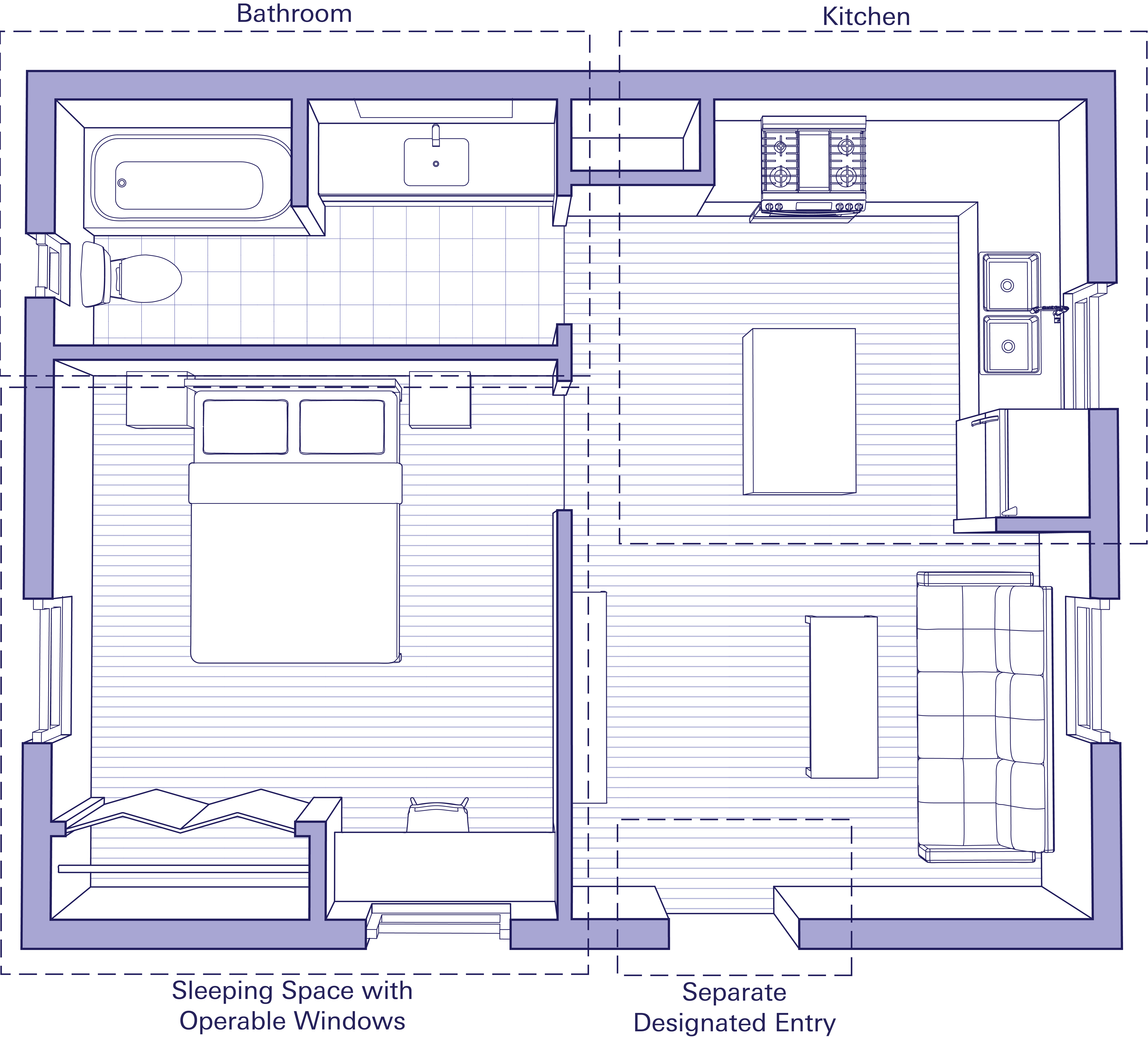
Every homeowner should have an ADU checklist |
All ADUs are required to include specific elements to be legally compliant and habitable. These requirements include: |
Kitchen |
|
Bathroom |
|
Separate designated entry |
|
Bedroom or sleeping space with operable windows |
|
Connections to utility networks such as electricity and plumbing |
|
|
If you would like to understand exactly what is required, you can reference NYC DOB Building Code 1208.3.1 Habitable Rooms and Spaces. |
Understanding Multiple Dwelling Law and costs |
If you already have multiple units on your property or plan to add more with your ADU, your project may fall under New York State’s Multiple Dwelling Law (MDL). Two-family homes that add a firewall-separated Attached or Detached ADU are exempt, but adding units beyond this can trigger additional building code requirements. These may include upgrades to fire separation, sprinklers, and egress, which can add to your project’s overall cost. Check with your RDP early to understand whether MDL applies to you. |
Common misconceptions about ADUs |
It’s important to know that not every extra structure or space on a property can qualify as a legal ADU. Sheds, treehouses, or unregulated basement and cellar apartments may seem similar but usually don’t meet the standards required for safe, habitable housing under NYC regulations. Informal basement and cellar apartments, for example, may be illegal and must be upgraded to meet all building and zoning requirements, including proper exits, natural light and ventilation, plumbing, and electrical systems, before they can be considered legal ADUs. |
Environmental impacts of ADUs |
New York City needs more housing, but certain materials and designs can impact the building’s carbon footprint during construction and over the long term. As a homeowner, you can make choices that reduce these impacts. Thoughtful decisions about energy use, insulation, and building materials can make your ADU more sustainable and contribute to a healthier City. The diagram below highlights opportunities to reduce your ADU's carbon footprint. |
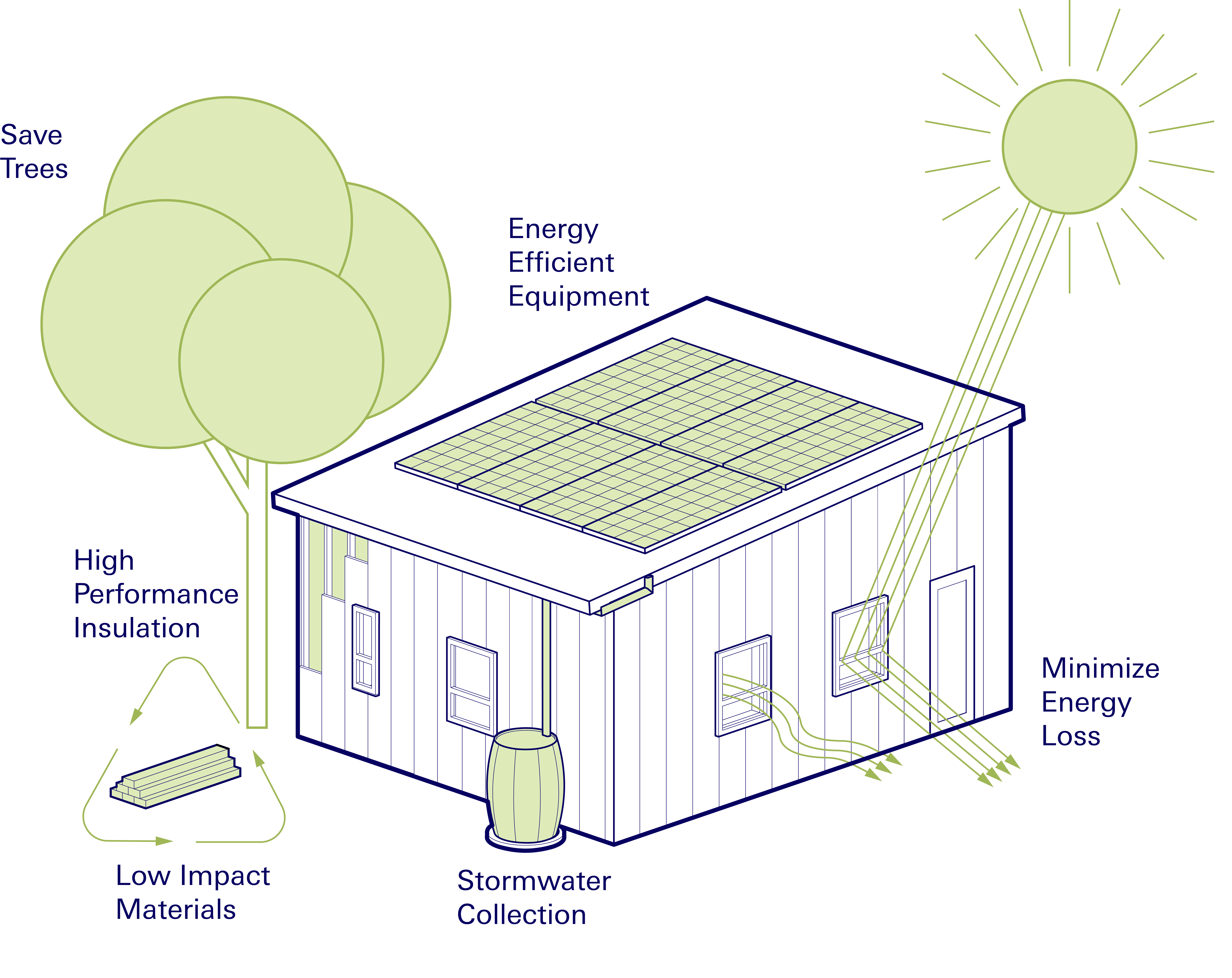
Help minimize energy loss |
|
Manage water on-site |
|
Choose less environmentally intensive building material |
|
Choose low-impact finishes |
|
Save trees
|
|
Environmental certifications |
|
Take advantage of opportunities to upgrade your existing home |
|
To find out more, review the following reports from various City agencies |
6. Preparing for
ADU Construction
Building an ADU is exciting. It’s when your idea becomes real, whether it’s a space for family, a rental unit, or room to grow. Before you begin construction, it’s important to work with a Registered Design Professional (RDP) and, when needed, an attorney to help you navigate contracts, permits, and property agreements.
When you’re planning a rear-yard structure, attic conversion, or basement upgrade, success starts with choosing the right design professional, creating a clear permitting plan, and understanding your legal responsibilities.
Permitting plans |
What is the ADU permitting process in NYC?Every ADU project in New York City requires a building permit from the Department of Buildings (DOB) before construction begins. Your RDP, whether a licensed architect or engineer, will handle the filing process, coordinate reviews, and ensure your design complies with zoning and construction codes. Understanding permit typesMost ADU projects use one of two permit categories filed through DOB NOW: Build:
Your RDP will advise which category applies and will prepare the required permit application documents and drawings. A DOB plan examiner will then review the submission for compliance. If there are objections, your RDP will respond with corrections until the permit application is approved. Learn how to obtain a permit on the NYC DOB NOW page. |
With a preapproved plan |
If you use a design from our Pre-Approved Plan Library, your RDP may be able to adapt the design to your site’s dimensions and submit it directly to DOB. These plans have already cleared key technical reviews, so approvals may move faster. Follow these steps when using the Pre-Approved Plan Library:
|
Without a preapproved plan |
If your project requires a custom design, common for Attic, Basement, Cellar, or even Rear-Yard ADUs, your RDP will prepare all drawings and technical documents from scratch. Follow these steps if you’re not using a design from the Pre-Approved Plan Library:
|
Next steps |
Once permits are issued, construction can begin. The completed ADUs must be inspected and approved and obtain a Certificate of Occupancy or Letter of Completion before anyone can move in. |
Attic, Basement, and Cellar ADUs |
Attic ADUs must meet requirements for ceiling height, egress, fire separation, insulation, ventilation, and natural light. Your RDP files the project as an ALT-CO or New Building job, depending on whether it is within an existing home. Basement ADUs can be created in one- or two-family homes if they meet Building Code and zoning requirements for safety, moisture control, flood risk, and adequate light and air. Your RDP can confirm whether your basement meets the conditions for a legal conversion. Learn how to obtain a permit and explore the Project Guidelines for Owners. You can also contact a NYC DOB Project Advocate located in the DOB borough office where you live for support with the process. |
Asbestos requirements |
If your home was built before 1987, you must complete an asbestos assessment before the DOB will issue a construction permit. This ensures that no asbestos containing materials (ACM) will be disturbed during construction. If asbestos is to be removed, the NYC Department of Environmental Protection (DEP) will require permits to do so. Explore the details on the DEP asbestos abatement page. |
What to know |
Learn more about asbestos requirements. |
Legal responsibilities |
License and access agreementsIn New York City, building close to another property often means you’ll need your neighbor’s cooperation. When ADU construction on your lot requires access to an adjoining lot, whether to install scaffolding; protect a shared wall, party wall, or retaining wall; or underpin a foundation, you’ll need a written agreement licensing access to your neighbor’s property. These documents formalize permission, outline conditions, and protect everyone involved. Because these agreements are legal documents, you should work with your RDP and an attorney to draft or review them. Your RDP can identify when an access agreement is required based on your site conditions and construction scope, and an attorney can ensure the terms protect your access rights and your neighbor's property. What access agreements coverA clear and complete access agreement removes ambiguity. It plainly defines what you need to do on your neighbor’s property, what you are allowed to do, how long you can do it, and how you’ll protect your neighbor’s property. Typical provisions include:
|
The legal framework: RPAPL § 881 |
When voluntary agreements can’t be reached, New York’s Real Property Actions and Proceedings Law § 881 provides a formal path. RPAPL § 881 is a New York law that allows a property owner to petition the court for a license to enter an adjacent property to make necessary improvements or repairs that cannot be done otherwise. This law allows you and your neighbor the chance to petition the court for access when it’s necessary for improvements or repairs. The court balances the interests of both sides and, if access is granted, sets fair conditions of a license, such as compensation and insurance coverage. Refusing reasonable access can have consequences. If your neighbor denies entry and a court grants an access license under RPAPL § 881, continuing to block access could result in legal penalties or liability for project delays or for physical or financial damages. The key is communication—your rights and your neighbor’s rights must be understood and respected. |
Limitations and responsibilities |
A license agreement only covers what is written. If access is granted for repair work, it can’t be used for new construction without written consent. Access can’t be transferred to another party, and it ends once the permitted work is complete. Any violation—such as staying beyond the agreed period or causing unnecessary disruption—can expose you to legal claims. Because these agreements are so specific, it’s wise to start negotiations early, ideally six months before work begins, and work closely with your RDP and/or an attorney experienced in construction law. |
Helpful links |
7. Beginning ADU Construction
Once permits are obtained, or “pulled,” construction can begin. Each stage of building should follow a clear path that your contractor and Registered Design Professional (RDP) can guide you through. This chapter illustrates what happens on-site and how to stay involved at every step.
Construction timeline |
The timeline for building an ADU on your property is determined by many factors, including the type of ADU you plan to build, the characteristics of your property, and the scope of your project. As a homeowner, you can anticipate the construction process taking anywhere from one week to 12 months. This timeline covers only the physical construction of your ADU. The entire ADU process, including design, permitting, general preparation, and the obtaining of a Certificate of Occupancy (covered in previous chapters) can vary based on external factors and decisions you make along the way. The construction of your ADU can only begin after you have finalized the details with your RDP and received all necessary construction permits. As a homeowner, you can typically expect the construction of your ADU to undergo seven major phases, from demolition and site preparation to move-in.
|
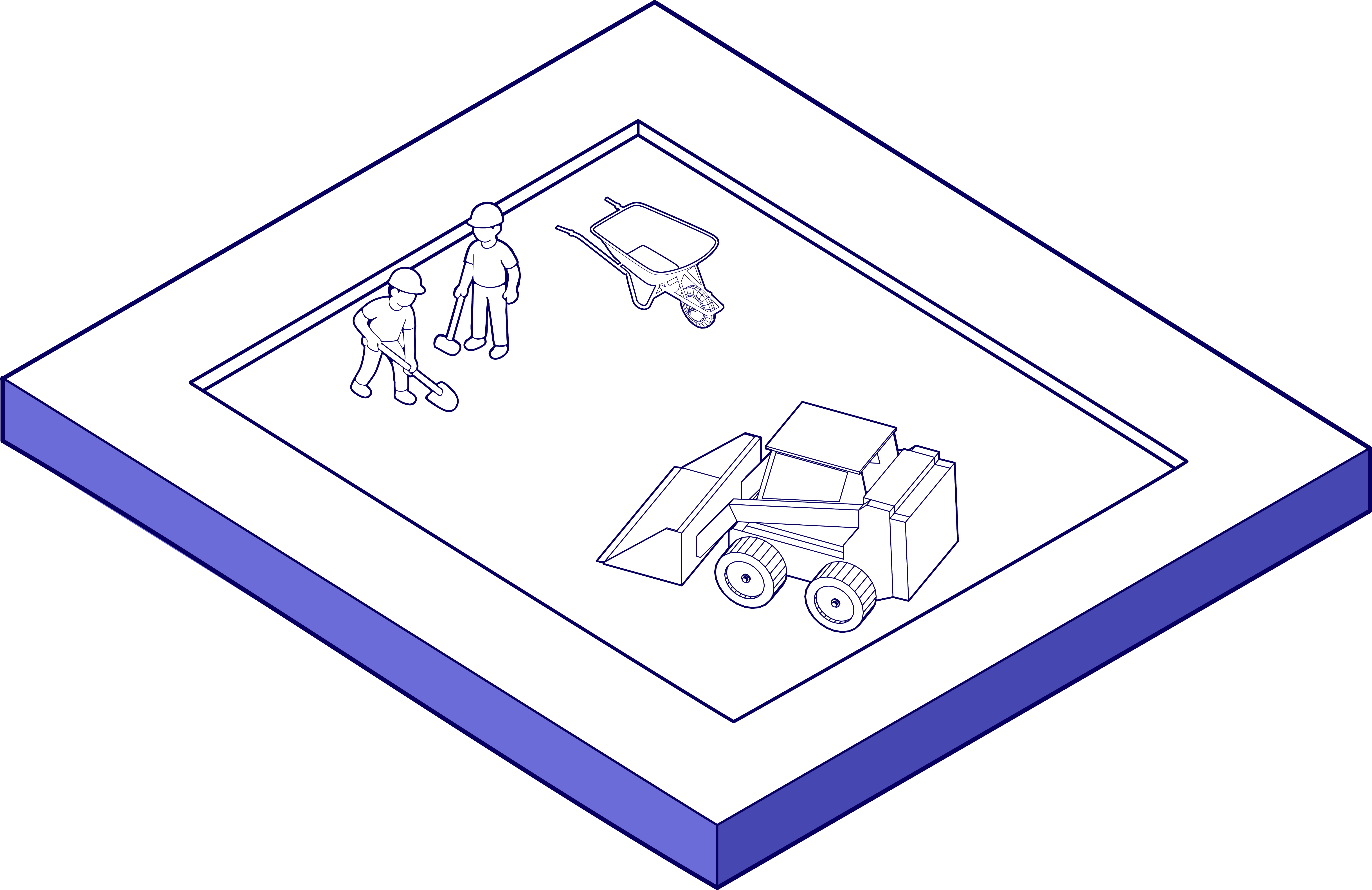
Demolition/site preparation |
|
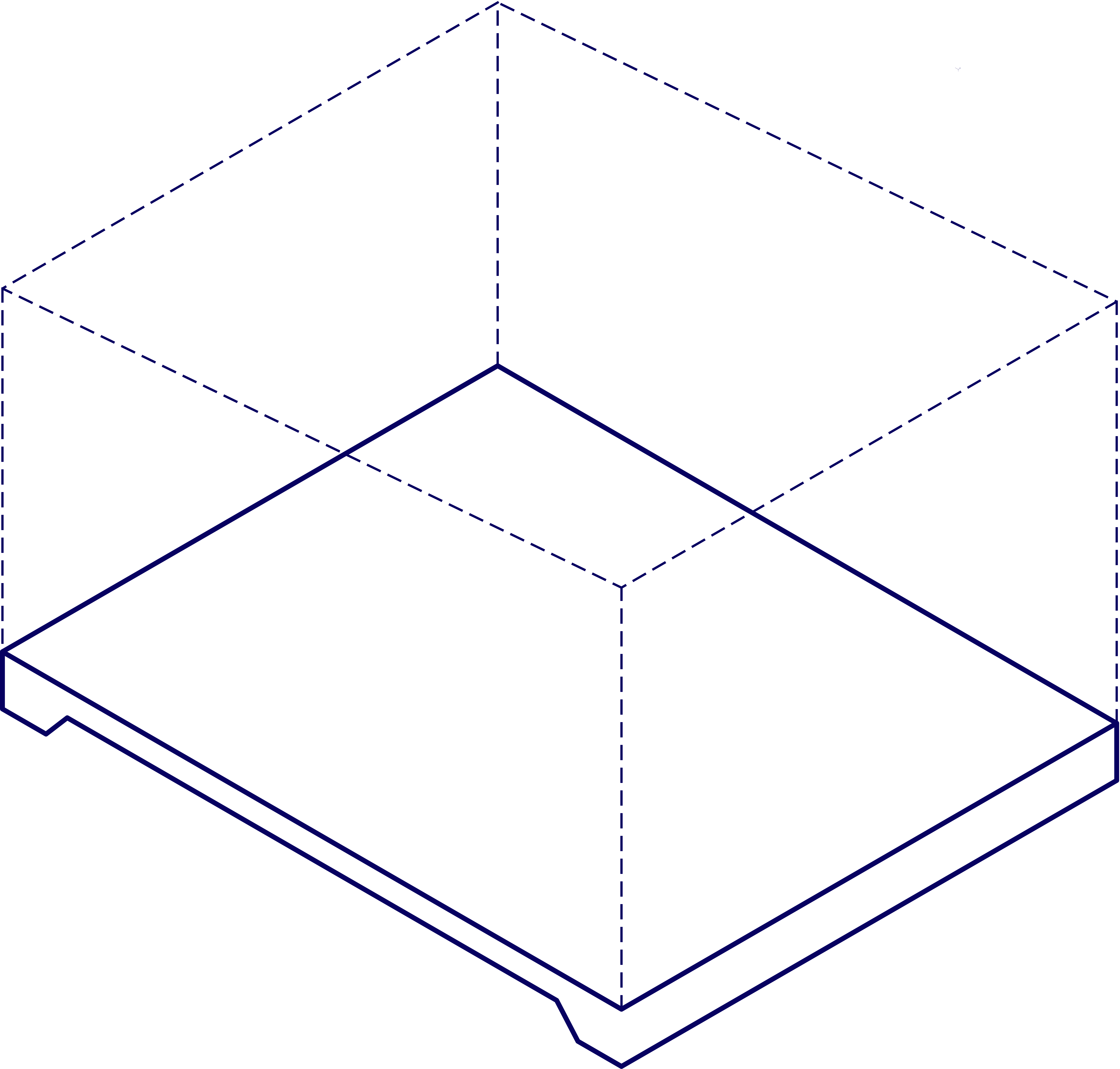
Foundation | After the site of your ADU has been prepped for construction, the contractor will begin to prepare the foundation for your ADU. This step is likely to only take place in new structures such as Detached and Attached ADUs. Foundations provide a level, secure base for your ADU to rest upon. Think of the foundation as feet upon which your ADU stands. |
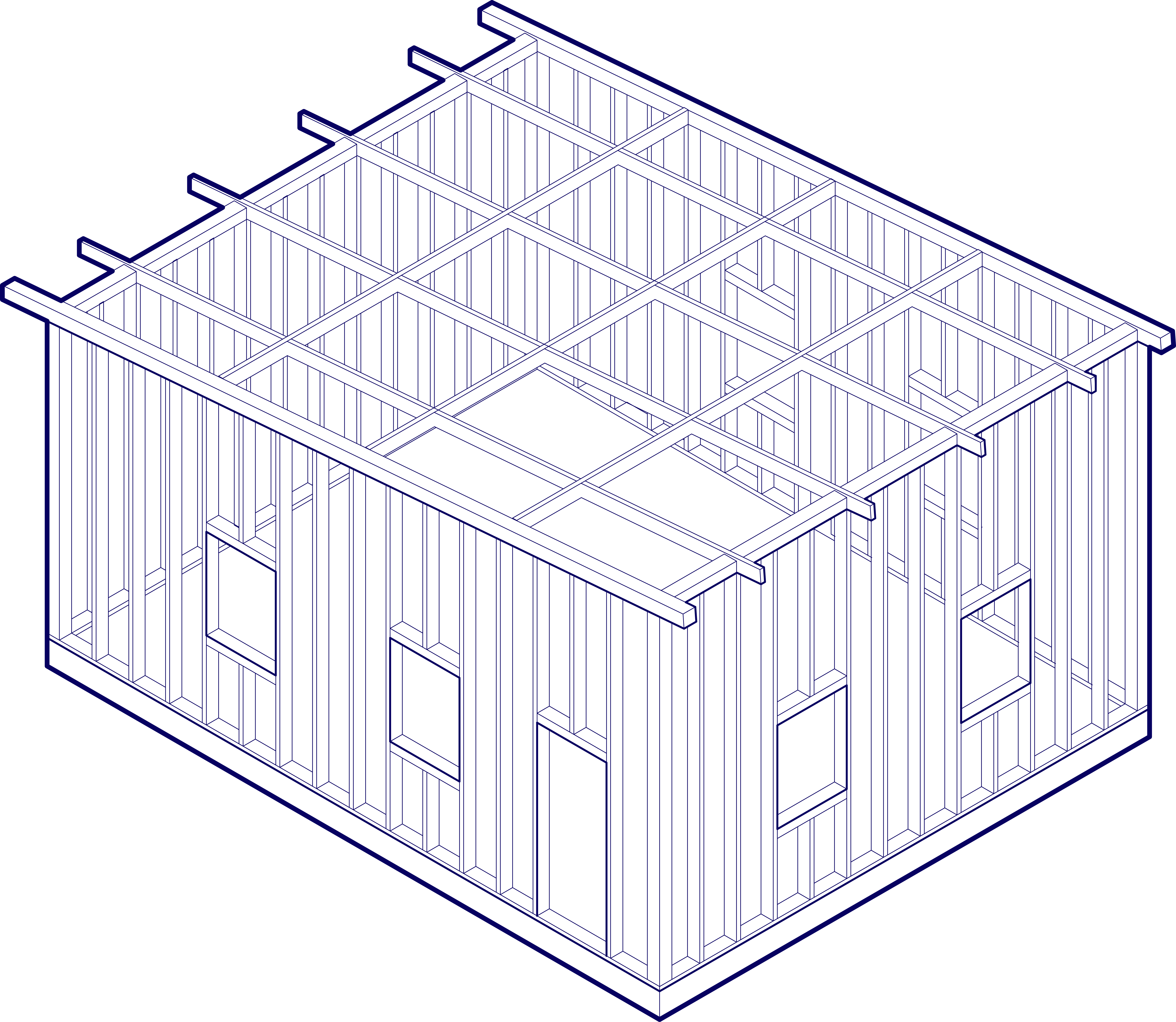
Framing | The next step in the construction timeline is framing. Framing is the process in which the floor, walls, openings, and roof begin to take shape. Think of framing as the skeleton of your ADU. At this time, you will begin to see your ADU take form and resemble the designed structure. |
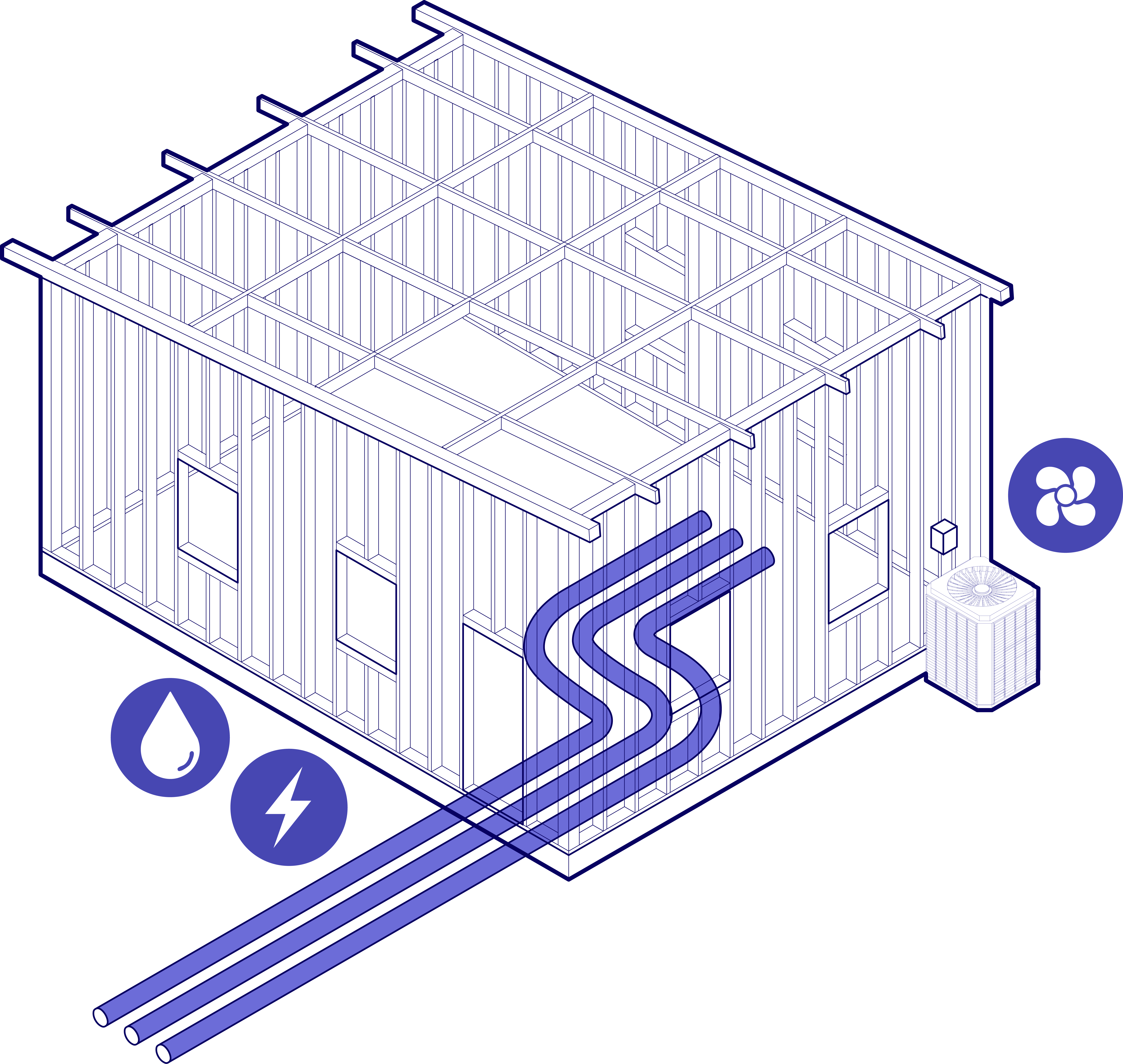
Mechanical, electrical, and plumbing (MEP) | After the frame of your ADU is complete, the plumbing, electrical, and mechanical systems will be integrated. These systems play an important role in powering and supporting your ADU and making it habitable. |
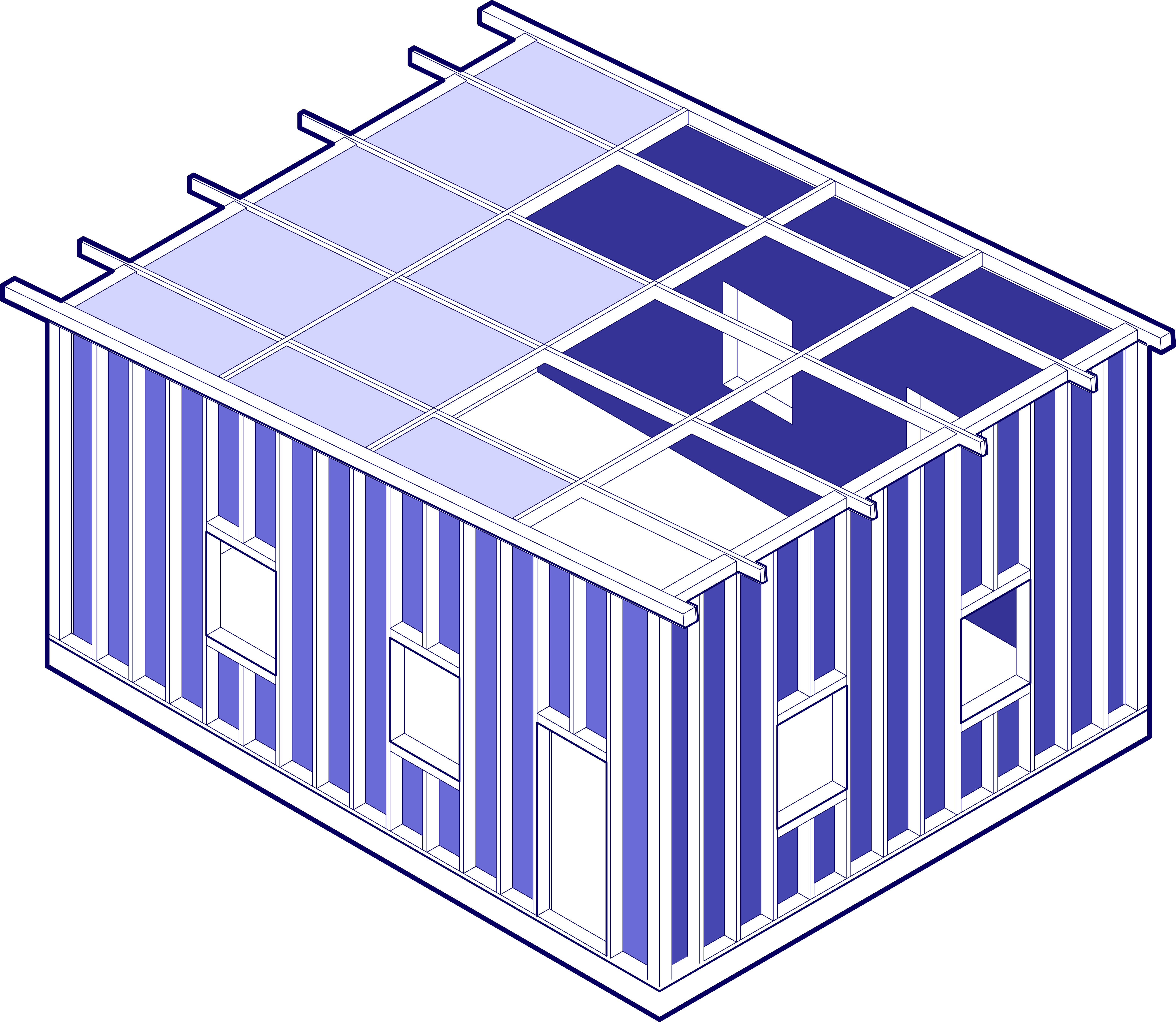
Drywall and insulation | Once critical utilities are integrated into the ADU’s structure, insulation and drywall will be installed over the framing, concealing most of the utility wiring, piping, and ductwork. Insulation and drywalling are equally important for regulating sound transmission, controlling temperature and interior comfort, and controlling moisture in your ADU. |
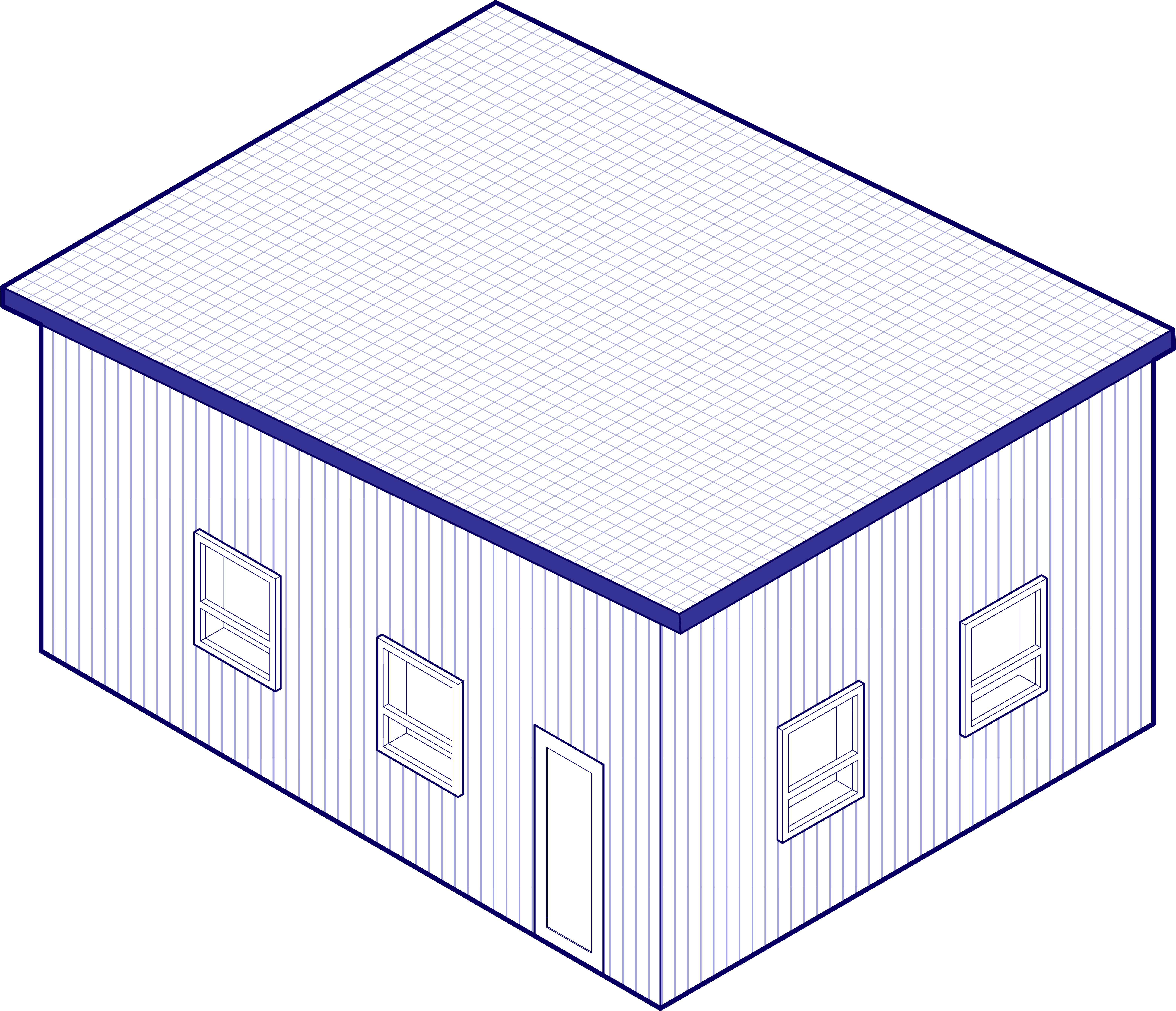
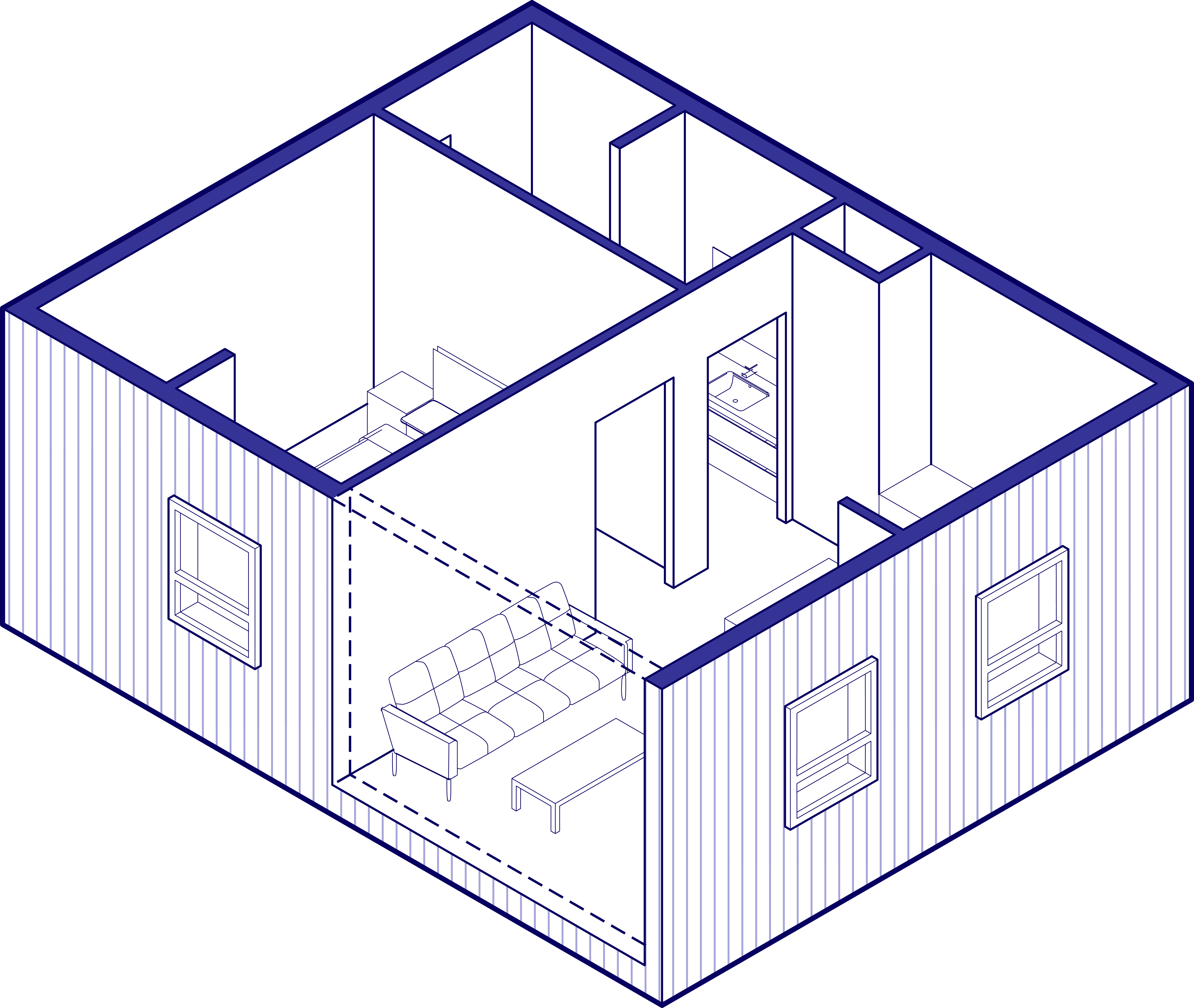
Exterior fit-out | Exterior fit-out includes the application of materials such as waterproofing, siding, and roofing, and the integration of elements such as doors and windows. At this point in the construction timeline, your ADU will begin to appear nearly complete. The selection of these finishing materials can be coordinated with your RDP to fit your personal tastes and the existing context of your property, and to ensure proper energy conservation. |
Interior fit-out, finishing touches, and inspections |
Now, finish materials such as flooring, appliances, fixtures, and cabinetry will be installed inside your ADU. Think of this step as the final stretch before move-in. Your RDP can offer guidance on the selection of these materials to ensure they meet building and energy code standards. |
Inspections |
Before you can occupy your ADU, several inspections will confirm that the work meets safety and code requirements. Your RDP or general contractor will schedule and coordinate these inspections. Some inspections must be conducted by the DOB, while others can be conducted by your RDP. As the owner, you must provide your email address to the DOB to receive correspondence, inspection updates, and final sign-off notifications for your project. This allows you to monitor progress and stay informed as work proceeds. Common inspections include:
|
|
|
Once all required inspections are passed and permits are closed, you’ll receive your Certificate of Occupancy (CO). For more information, see Project Guidelines for Owner - Buildings and borough-based inspection lead times. |
What to look for as a homeowner during construction |
It is important to maintain an ongoing dialogue with your selected contractor and RDP throughout the design-and-construction process. The construction process can often feel long, so it is important to remain patient and understand and anticipate potential impacts on your daily life and routine. |
Questions and conversation starters to consider as a homeowner: |
Schedule and timeline
Safety and construction practices on-site
Points of contact
Quality assurance and legal matters
As the property owner, you should focus on hiring a general contractor who is licensed and insured and has the proper safety certifications and training. The general contractor is responsible for maintaining a safe job site and ensuring that all workers have the required safety training under NYC law. If you see unsafe conditions, such as unsecured scaffolding, missing protective barriers, or debris blocking walkways, notify your contractor in writing as soon as possible. Keep a record of your communication. If the issue is not resolved, you can contact 311 or the Department of Buildings (DOB) for inspection or enforcement. Explore more about how to navigate your construction project on the DOB Working on Your Project page. |
8. Moving Into Your ADU
Once construction is complete, your ADU is almost ready. But there are a few final steps to take before anyone moves in. This chapter covers what it takes to make your unit legally habitable and how to navigate your new role as a landlord.
In this chapter, you’ll find guidance on securing your Certificate of Occupancy, setting rent, screening tenants, and understanding key homeowner responsibilities. You’ll also get details on safety and maintenance requirements specific to ADUs, along with resources to help you manage your property with confidence.
Preparing a unit for occupancy |
Legal occupancyAfter construction is complete and before anyone moves in, you must confirm that your ADU is legal to occupy. Every new building in NYC needs a Certificate of Occupancy (CO), which officially states how the space can be used for the designed purpose and who can live there. Interior and attached ADUs will also require an updated or amended CO for the existing home before they can be legally occupied. To help with the process, you can choose to hire a filing representative, also known as an “expeditor,” who can assist with submitting paperwork and tracking approvals through the Department of Buildings. Your Registered Design Professional (RDP) remains responsible for preparing and certifying drawings, managing technical filings, and completing the steps for your CO requirements on DOB NOW: Inspections. Documents that should be on hand during the inspection include:
If the inspector identifies any violations, they must be addressed, and a reinspection may be required. Learn about CO requirements at Certificate of Occupancy - Buildings. |
What resources are there for
|
Deciding what to charge for rentThe location of your apartment, its size, and its amenities will determine how much you can reasonably charge in rent while maintaining tenants. One way to start determining how much to charge for rent is to look up similar-sized apartments in your area, also known as comps, and see how much rent is for those units. You can use the Budgeting Tool to compare different rental income amounts to see what works for your budget. Rent increasesAccording to New York Real Property Law Section 226-C, landlords in New York must provide tenants with advance notice of a rent increase of 5% or more, with a notice period of 30 to 90 days, depending on the length of the tenancy or lease term. Broker feesOn June 11, 2025, the Fairness in Apartment Rental Expenses (FARE) Act took effect in New York City. This law prohibits brokers who represent landlords from charging tenants broker fees. Landlords or their agents must disclose other fees that tenants must pay in their listings and rental agreements. Choosing your tenant and managing the relationshipWhen a landlord, broker, or owner screens prospective tenants during the application process, it is important to distinguish between legitimate questions and discriminatory questions that could violate fair-housing laws. Housing providers have a right to set financial and credit qualifications, a process that provides some assurance that the applicant will potentially be a good tenant. Qualifications and inquiries must be applied equally to all applicants and must not be influenced by race, national origin, or other protected factors. Screening may include:
|
|
See Fair Housing’s page on Tenant Selection for more information. You can also explore more about home ownership and renting in NYC with the Department of Housing, Preservation & Development’s ABCs of Housing Owners’ Guide. |
After renting your ADU |
Once you’ve selected a tenant, create a written lease agreement that clearly outlines rent, the payment schedule, maintenance responsibilities, and other terms. New York State law requires landlords to provide tenants with written notice of essential information, including building registration, emergency contacts, and repair procedures. Post or share this information in an accessible location. It’s also a best practice to encourage tenants to sign up for Notify NYC or 311 emergency alerts, which provide updates on citywide emergencies, weather events, and utility disruptions. Maintaining open communication and clear documentation helps ensure a safe, respectful living arrangement for both you and your tenant. |
Landlord responsibilities in NYC |
Landlords must ensure that buildings are safe, clean, and well maintained, including common areas and individual apartments. Landlords of ADUs also need to create shared access to the street from the rear yard. Among other responsibilities, owners must provide and maintain security measures, heat, hot and cold water, and good lighting. Homeowners must comply with the New York City Housing Maintenance Code and register their properties annually with the Department of Housing, Preservation & Development (HPD) if it contains rental units. If the building is rent-stabilized, the owner must also register rents annually with New York State Homes and Community Renewal. Most ADUs in one- or two-family homes do not constitute a “multiple dwelling” under the New York State Multiple Dwelling Law (MDL), but owners must still ensure their properties comply with all applicable local housing and safety codes. |
|
To learn about the specific topics listed below, check out the Homeowner Handbook by HomeownerHelpNY.
The ABCs of Housing Owners' Guide is another great resource for City guidance on a range of topics such as:
If you want to understand more about tenant rights, read up on Tenants’ Rights and Responsibilities in NYC. |
Get support
|
To see a full list of resources, check out HPD Resources for Landlords and Property Owners. |
Glossary
Ancillary Dwelling Unit |
In New York City, an ADU is a self-contained home that’s built on the same lot as another house. Think of it as an extra living space, like a rear-yard cottage, a converted basement, or a garage apartment. Each ADU is a separate home. It has its own kitchen, bathroom, and entrance. An ADU is compact, measuring no more than 800 square feet, and is intended for residential use only. |
attached (building) |
A building shall be considered attached when it abuts two lot lines other than a street line, or another building or buildings other than a semi-detached building. |
Attached ADU |
An Attached ADU is an addition that abuts to and expands the footprint of your house. It might run beside the main building in the side yard or extend into the rear yard. This is a separate home with its own entrance that either shares a wall with the main building or sits directly beside it with its own fire-rated wall. |
Attic ADU |
An Attic ADU is an apartment built within your attic that has enough headroom. It uses space under the roof without changing the footprint of your property. Attic ADUs specifically require automatic sprinklers. |
Basement or Cellar ADU |
A Basement or Cellar ADU is an apartment located below the first floor of a home. To qualify as a legal ADU, the space must meet specific safety and habitability requirements, including minimum ceiling height, adequate light and ventilation, fire separation, and a legal means of entry and exit. Basements and cellars are defined differently under the Building Code and have distinct rules related to floor level, window placement, and allowable living space; these rules affect whether an ADU can be built in each location. |
Building Code |
The Building Code is a set of rules and regulations that govern the design, construction, and maintenance of buildings with the goal of ensuring the health, safety, and welfare of building occupants. |
building envelope |
The building envelope is defined by the enclosure that separates the conditioned space from the exterior space. |
building footprint |
The building footprint is defined by the area your structure takes up on the ground plane. |
Detached ADU |
A Detached ADU is a separate building in the rear yard. This could be a newly built ADU, a conversion of an existing garage into an ADU, or a new ADU constructed above a garage. Detached ADUs offer great privacy and flexibility. |
detached (building) |
A detached building is a building surrounded by yards or other open areas on the same zoning lot. |
Dwelling Unit |
A single unit providing complete independent living facilities for one or more persons, including permanent provisions for living, sleeping, eating, cooking, and sanitation. |
flood zone |
A flood zone is a geographic area characterized by its risk of flooding. In New York City, flood zones are composed of two component areas: the coastal flood risk area and the 10-year rainfall flood risk area. |
floor area ratio (FAR) |
A zoning regulation and formula that determines how many square feet are allowed to be developed on a given property. The FAR is the total floor area on a zoning lot divided by the lot area of that zoning lot. |
Greater Transit Zone |
The Greater Transit Zone boundaries are used for several zoning rules. They determine where special rules for Qualifying Residential Sites are applicable and how nonresidential parking is calculated in some zoning districts. Being located within the Greater Transit Zone may allow for more or different development opportunities. |
gross floor area |
Gross floor area includes the total square footage of a built structure. This includes all floors and space taken up by walls, ducts, and stairwells. |
lot line |
A lot line is a boundary that divides one property from another, or from a street or any public space. |
Neighbor Notification Affidavit |
A notice provided to adjacent property owners that you plan to apply for and build an ADU on your property. |
NYC rulemaking process |
New York City creates legally binding rules using a public process called CAPA (City Administrative Procedure Act). First, an agency drafts a rule and posts it for public review. People can share comments online or during a hearing. The agency must consider this feedback before publishing the final rule. This process sets rules on where ADUs can be built. It also outlines safety standards and explains how homeowners can get approval. City agencies like the Department of Environmental Protection and the Department of Buildings have passed rules. These rules help regulate and ensure quality in the ADU process. You can read more about these rules on the NYC Rules website. |
permitting |
Building permits are required before construction projects can begin in New York City. Permit applications must be submitted to the Department of Buildings for code compliance review and approval. |
Pre-Approved Plan Library |
The Pre-Approved Plan Library (PAPL) is a design resource library where you can browse pre-designed Detached and Attached ADUs from industry professionals. The ADU designs in the PAPL have been preapproved by the NYC Department of Buildings, allowing you to fast-track the permitting, approval, and design process associated with building an ADU. |
rear yard |
The rear yard is the open space at the back of your property measured 20 feet from your rear lot line. In some cases, the rear yard is measured 30 feet from your rear lot line depending on the height of the primary building or lot size. |
Rear-Yard ADU |
A Rear-Yard ADU is a freestanding home (Detached ADU) that sits behind your main building or a home attached to your main building (Attached ADU). |
semi-detached (building) |
A building in which the primary dwelling unit abuts another one-family home (think duplex). |
setback |
A setback is the required distance a building must be offset from an existing building, property line, or street. Setbacks help provide adequate light and air to surrounding streets and open spaces. They also improve fire safety through increased spacing between building structures. |
single-family residence |
A single-family residence is a building containing only one dwelling unit and occupied by only one family. A single-family residence may also include an ancillary dwelling unit in the same structure or in an ancillary building, if it qualifies. |
two-family residence |
A two-family residence is a building containing not more than two dwelling units and occupied by only two families. A two-family residence may also include an ancillary dwelling unit in the same structure or in an ancillary building. |
zero lot line (building) |
A building in which one side is built directly on a property’s lot line, with no side yard on that side. |
zoning amendment |
Zoning text and map amendments and zoning amendments, whether citywide or area-specific, adjust the Zoning Resolution or map to accommodate developments that align with City planning goals. Amendments are either text-based (changing the Zoning Resolution) or map-based (changing zoning designations). These changes affect all properties equally within the modified area. |
zoning district |
Each zoning lot has an underlaying zoning district based on the context of the lot in the City. Zoning districts are most commonly differentiated by residential, commercial, and manufacturing uses. |
Zoning Resolution |
The Zoning Resolution is the law for building and development in New York City. Zoning is how a city splits land into zones. Each zone has its own uses and rules that must be followed. These rules regulate features such as the shape, size, and placement of buildings. In New York City, a maximum of one ADU is allowed on a property designated as a single- or two-family home. Each single- or two-family home lies within a unique zoning lot. The characteristics of the lot are used to determine if and where you can build an ADU on your property. |
Appendix
Key building code requirements, technical standards, and inspections for ADUs
This appendix explains the building code, safety, and inspection requirements for ADUs in New York City. It is intended to be used alongside the chapters in this guide.
Zoning determines whether an ADU may be allowed. The NYC Building Construction Codes determine whether it can be safely built and legally occupied. These requirements apply to all ADU types and are enforced primarily by the NYC Department of Buildings (DOB), with review or inspections by other City agencies and utility providers as required.
This appendix is organized to help homeowners understand what standards apply, why they matter, where projects commonly get stuck, and when professional or agency review is required.
Definitions of technical terms appear in the glossary.
1. Core building code framework for ADUs |
Beyond zoning regulations, the NYC Building Construction Codes set specific safety and habitability standards that every ADU must meet. These include requirements for ceiling height, natural light and ventilation, fire access, and separate entrances. Appendix U of the NYC Building Code was created to establish rules specific to ADUs. Sections such as U101.2 General Conditions set out baseline requirements for making ADUs safe and code compliant. Appendix U also outlines standards for:
Rear-Yard ADUs must provide a minimum 5-foot-wide unobstructed access path for safe entry and emergency response. |
DOB Rules (1 RCNY §105-08) |
In addition to the Building Code, 1 RCNY §105-08 is a DOB rule that establishes technical requirements for ADUs, including:
These requirements apply regardless of zoning eligibility and are enforced during DOB plan review and inspections. |
Utility capacity and metering considerations |
In addition to zoning and Building Code compliance, ADUs must be supported by adequate electrical, gas, and water capacity. Depending on the size of the ADU, appliance selection, and whether utilities are separately metered, a project may require upgrades to existing services. Common triggers for utility upgrades include:
Utility upgrades may involve new meters, service connections, trenching, or coordination with utility providers and City agencies. These upgrades can affect cost, permitting timelines, and inspection sequencing and should be evaluated early by your registered design professional (RDP) and contractor. |
2. Light, ventilation, and habitable space |
Every habitable room in an ADU must have natural light and ventilation, typically through windows that open directly to the outdoors. Windows must meet minimum size and placement requirements to ensure adequate light and airflow for each living space. Light and Ventilation of ADUs | U103.3 |
Habitable space |
Habitable space is defined in NYC Building Code Section 202 as all rooms and spaces within a dwelling unit in Group R or I-1. This includes bedrooms, living rooms, studies, recreation rooms, kitchens, dining rooms, and other similar spaces. The following are not considered habitable space:
|
Window and ventilation minimums |
The Building Code, Zoning Resolution, and Housing Maintenance Code establish minimum standards for light and air. These standards include clear, open space around each window to ensure proper airflow and access to natural light. Your RDP can confirm that window placements and dimensions meet these requirements before design or construction begins. |
Energy code compliance |
ADU projects must comply with the NYC Energy Conservation Code, which governs insulation, air sealing, mechanical ventilation, and system efficiency. Energy Code compliance is reviewed separately from zoning and Building Code requirements. Documentation demonstrating compliance is required as part of DOB approvals. Missing or incomplete energy filings can delay final inspection and legal occupancy approval, even when construction is otherwise complete. |
3. Entrances, egress, and fire department access |
ADUs must provide safe, direct access for occupants and emergency responders. The Building Code establishes requirements for separate entrances, compliant egress paths, and fire department access to ensure life safety and emergency response readiness. |
Separate Entrance Required | U103.4 |
An ADU must have its own entrance, directly from outside, or from a shared public hallway inside the main building. |
Fire Department Access | U103.8 |
The main entrance of an ADU must be within 100 feet of the curb line so the fire department can reach it. A clear, unobstructed 5-foot-wide access path, or egress, is required. |
|
|
These access requirements apply to all ADU types and are strictly enforced during plan review and inspections. |
4. Multiple Dwelling Law and ADUs |
Two-family homes adding a fire-separated Attached or Detached ADU are exempt from New York State’s Multiple Dwelling Law (MDL). Other ADU types, such as Basement or Attic ADUs, may trigger MDL requirements including enhanced fire safety, light, and ventilation standards. Your RDP can help determine whether your project qualifies for an exemption. |
5. Zoning variances and floor area ratio (FAR) |
Understanding zoning variances Understanding FAR |
6. Fire protection and sprinkler standards (NFPA 13D) |
In nearly all cases, ADUs in New York City must include an automatic sprinkler system conforming to NFPA 13D, as adopted and modified by the NYC Building Code.
If a building is three or more stories and includes a Cellar ADU, the entire building may be required to be sprinklered. Additional life-safety systems include smoke alarms (BC §907), carbon monoxide alarms (BC §915), and gas alarms where applicable (BC §918). |
7. Inspections and final approvals |
Building an ADU in New York City requires multiple inspections, often by different inspectors and agencies. These inspections confirm compliance with approved plans and applicable codes. Your RDP and general contractor are responsible for coordinating inspections. |
DOB inspections |
Typical stages include:
|
Specialty and agency inspections |
Depending on the project, inspections may also be required by:
|
Accessibility considerations |
Depending on building configuration, unit location, or funding source, accessibility requirements may apply. These can trigger additional design elements or inspections, such as lifts or accessible routes. Accessibility determinations are project specific and should be reviewed early. |
8. Final sign-off and legal occupancy |
After all inspections and required documentation are complete, DOB issues either a Certificate of Occupancy (CO) or a Letter of Completion (LOC). Only after this approval may an ADU be legally occupied or rented. |
Keep records |
Maintain copies of:
These records may be needed for refinancing, insurance, or resale. |